We explore the origins of some common queer phrases and labels used within the LGBTQIA+ community.
There are so many different labels and names within the LGBTQIA+ community.
Some are fun and cheeky while others go to the very identity of who we are.
However, where did these names even come from? We searched out their origins.
Gay
Many know the word was more synonymous with “happy” and its medieval French origins from gai (meaning full of joy or mirth) does support that. However, it’s also had sexual overtones for a few hundred years.
In the 18th century, lewd behaviour was part of the “gay life” with the word taking on a more homosexual connotation with male sex workers.
According to author Rictor Norton, the Dictionary of the Vulgar Tongue from 1811 stated that “the gaying instrument” was a slang word for the penis. Well, I never!
View this post on Instagram
Eventually, it made its way into the Oxford English Dictionary in 1951 as slang for homosexual.
It became an important word throughout the liberation movement and has now entered the mainstream as an entirely everyday word.
Lesbian
The original meaning of the word is about a resident of the Greek island of Lesbos. But how did this become a word for gay women?
Well, Lesbos was the home to 6th-century poet Sappho, whose works focused on the beauty of women and her love for girls.
In the late 19th century, those in the medical field started paying more attention to gay women (all focus had been on the blokes).
Discussions of Sappho’s sexuality were in fashion at the time, so from that the terms Sapphism and Lebsianism emerged.
The term lesbian was first used in a medical dictionary in 1890 and became a more common word over time.
Twink
This one is up for debate! Some believe it comes from the British slang word twank (which basically means a bottom male sex worker).
However, others have claimed it comes from the American snack Twinkies which are “little nutritional value, sweet to the taste, and creme-filled.” I’ll let you make of that as you will.
Bears
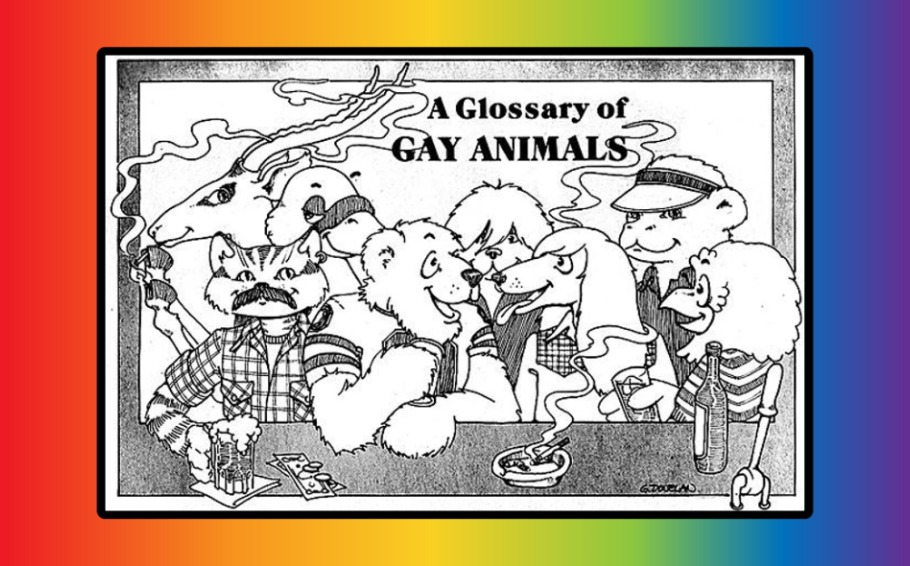
American publication The Advocate wrote about “bears” in their 1979 article Who’s Who at the Zoo.
The piece described them as “usually hunky chunky types reminiscent of railroad engineers and former footballer greats. They have larger chests and bellies than average.”
View this post on Instagram
Richard Bulger and Chris Nelson, who founded Bear Magazine in 1987, popularised the term. This led to the bear movement we know today, which even created its own flag in 1995.
Dyke
The term first appeared in a Medical Dictionary in 1921. It recounted the tale of a female prisoner who said “that she had indulged in the practice of ‘bull diking’ and that a certain young woman fell in love with her.”
The word may have roots related to the late-19th-century slang use of dike (“ditch”) for the vulva while others have claimed it comes from Middle English for “fake penis” or “false man”.
View this post on Instagram
Whatever the exact origins are, it eventually became a word of hate but was reclaimed and is used by many in the community including the famous Dykes on Bikes who lead Mardi Gras each year.
Drag
The origins are believed to be theatre slang about the long dresses men wore to play female characters trailing along the floor.
Some also state it came from “grand rag” which was used in regards to masquerade balls.
The term drag queen was first used in print in 1941, with terms such as female impersonator and cross-dresser being used before that. But today we know that drag is far more than that!
Coming out of the closet
It’s a term we all know but what the hell did a closer have to do with it?
View this post on Instagram
Well, it started with the term “coming out” which referred to young women being introduced to society.
This was repeated in gay circles when some men would come out at events modelled on Debutant Balls. Phrases have been found of this from 1931.
So, what about the closet? D. Travis Scott has written that the closet was previously used as a word for the bedroom, where the activity they were hiding often took place. Additionally, hiding a secret was synonymous with skeletons in the closet.
The Australian Writers’ Centre states that “in the 1950s, the term ‘coming out’ re-emerged in universities across America. By the 1960s, it had been paired with “the closet” to indicate that so-called shameful secret.”
This matches up with the first use of the term in print from 1963.
Read more LGBTQIA+ history
NSW heritage listing for graves of gay bushrangers
A quarter of a century of DNA
Famous lesbians: extraordinary women from world history
Consensual buggery in colonial Australia
The 50-year reunion to celebrate this iconic 70s gay venue
For the latest LGBTIQA+ Sister Girl and Brother Boy news, entertainment, community stories in Australia, visit qnews.com.au. Check out our latest magazines or find us on Facebook, Twitter, Instagra