Today, 19 May, is the annual Agender Pride Day, which recognises and celebrates the agender identity which falls under the non-binary umbrella.
The ‘A’ in the LGBTQIA+ acronym encompasses some of the most misunderstood and underrepresented identities within the community, including agenderness (as well as aromantic and asexual).
While the world is gradually coming around to understand the full scope of the sexual and gender identity spectrum — the State Government of Tasmania became the first in Australia to officially add the “A” to their use of the acronym in 2023 — the annual Agender Pride spotlights its community, allowing everyone the chance to learn more about what it really means.
Below, we break down some of the most common questions about what it means to be agender.
View this post on Instagram
Related content:
- Tasmanian Government officially adds the “A” to LGBTIQ+
- What the major parties are really offering LGBTQIA+ Australians
- The Westminster Kennel Club Dog Show is non-binary AF
What does agender mean?
Agender quite literally means “without gender”, or according to the Oxford English Dictionary, “designating a person who does not identify as belonging to a particular gender”. That said, it’s a broad identity that can mean totally different things to different people.
For some, ‘agender’ is like a gender label or category of its own. Others may feel that they don’t identify with any particular gender identity, so they use it to describe a certain genderlessness, or “genderblank” space that emerges when they try to consider or express their gender identity.
Others still may feel that they fluctuate between gender identities without really ascribing to any. Some people simply feel an aversion or apathy to the concept of being gendered, and use the term almost as a rejection of the gender construct.
There are a number of terms that can fall within the basket of agender, including: neutrois (a neutral, null, or genderless state often tied to gender dysphoria), agenderfluid (both agender and genderfluid), agenderflux (agender with fluctuations between femininity and masculinity), genderblank (an inexplicable gender identity), genderfree (free from having any gender), and polyagender (identifying with multiple agender terms).
The word “agender” hasn’t been around for very long, with Them writing that the first documented use of it was in an Internet forum called UseNet in 2000, with a user posting: “God is amorphous, agender, […] so image can’t be a physical or gender or sexual thing.” But that isn’t to say that the concept of being agender hasn’t been around for much longer.
Many indigenous cultures, including Native American, Polynesian, and Aboriginal and Torres Strait Islander people, have historically acknowledged and respected genderfluid, third gender and agender identities outside of the male-female binary that the Western world standardised.
2017 marked the first time a person was legally recognised as agender, when an American citizen from Portland successfully took their request to court.
What is the agender flag?
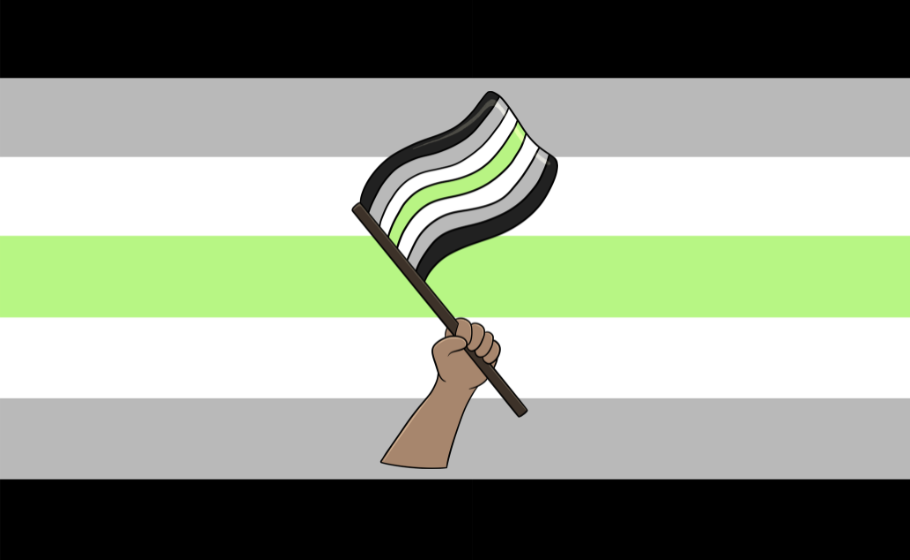
The agender flag features seven horizontal lines in black, grey, and light green.
It was created in 2014 by a Tumblr user called Salem X, who wanted to create a symbol to represent the growing agender community, which they are part of. They describe their understanding of identity as “a sort of gender atheism, or lack of belief in gender”.
According to Salem, “the black and white stripes represent an absence of gender, the grey represents semi-genderlessness, and the central green stripe represents nonbinary genders”.
They further went on to clarify that they chose green at the centre of the flag as an inversion of the purple shade on the non-binary flag. “I inverted it because genderlessness is not the same experience as those who identify as being between the male/female spectrum,” they said.
View this post on Instagram
What is the difference between agender and non-binary?
While agender is often included under the umbrella of non-binary for the fact that it sits outside of the male-female gender binary, the two identities aren’t homogenous. Since there are many interpretations of both terms, there are many ways to explain the differentiation.
Largely, the difference is that non-binary people consider themselves as having a gender identity, and agender people do not. Non-binary: your gender identity is neither the man nor the woman side of the binary. Agender: your gender identity is null.
In 2020, Bridget Harilaou, an agender writer, musician, Drag King and community worker, illuminated this idea in an article for SBS.
They explain that they use the term agender as it frees them from the construct of a gender binary as a whole. “The emphasis of two exclusive options is something I want to let go of altogether, which the word agender allows me to do,” they wrote.
Can I be agender and straight?
While gender and sexuality can often intersect, they are separate aspects of identity. That means that identifying as agender does not necessarily affect your sexuality. Agender people may identify as straight, gay, queer, lesbian, gay, pansexual, bi — the list goes on and on.
That also means there is no right way to “be” or “look” agender. How people express themselves is personal, and nobody needs to perform their identity for the sake of others’ expectations.
Agender pronouns
There are no rules to being agender — or any identity, for that matter! It’s about what feels right for the person in question. Many agender people will use the pronouns “they/them”, but it’s an entirely personal decision with no right or wrong answer. Asking respectfully is key.