The Parliamentary Inquiry into anti-LGBTQIA+ hate crimes in Victoria has released the findings of its hearings, highlighting how technology is driving a disturbing rise in anti-LGBTQIA+ hate crimes.
Hearings were conducted in June by the Victorian Parliament Legislative Council Legal and Social Issues Committee, where evidence was collected to write the final report, released on the 8th of September.
The inquiry was established following a series of attacks targeting gay and bisexual men and heard a range of evidence, including about the role of social media and the manosphere in fuelling the homophobic attacks.
The report reveals a widespread disconnect between the LGBTIQA+ community, support systems, and legislative responses, and details several recommendations to change the current system.
Related content:
- Hate crime survivors asked to share experiences for Parliamentary Inquiry
- Victoria’s Inquiry into anti-LGTBQIA+ hate crimes begins hearings today
- Vic parliamentary inquiry established following app attacks on gay and bi+ men
What was the inquiry about?
It was established thanks to the Victorian Greens, following a series of disturbing attacks targeting gay and bisexual men using social media and dating apps, some of which were recorded and posted to social media. It aims to examine the rise in anti-LGBTIQA+ sentiment and hate crime in Victoria, as well as propose a way forward.
The report comes less than a month after five young men aged 16 to 18 were arrested and charged with kidnapping, sexual assault, intentionally causing injury and armed robbery.
They reportedly used apps to lure gay and bisexual men to locations where they were attacked, reflecting the rise in technology-facilitated LGBTIQA+ hate crimes.
View this post on Instagram
What did they find?
Academics, advocates and support organisations gave evidence that anti‑LGBTIQA+ sentiment is growing in Victoria and that hateful attitudes are dangerously close to becoming “normalised”.
Though anti-LGBTQ+ sentiment isn’t in itself a hate crime, the inquiry heard that a hate crime can be defined as a “criminal offence that is wholly or partially motivated by bias towards a protected category”.
Overall, the report made 41 findings and 35 recommendations to inform how Victorian support services and institutions respond to a growing trend in LGBTIQA+ hate.
Findings include:
- There is currently no nationally agreed definition of a hate crime, which makes it much harder to understand, record and respond to this type of crime.
- There’s “concern for an increased terror threat against LGBTIQA+ communities in Australia”.
- Victim–survivors face “significant barriers navigating the justice and support systems”.
- Online platforms including social media and dating apps were found to exacerbate danger to LGBTIQA+ people, through algorithms promoting harmful misinformation and a lack of online protections.
- Education is a key area which can “facilitate conversations and improve equality outcomes for the LGBTIQA+ community”.
Two of the biggest themes that continued to show up in findings were how platforms facilitate offences and how LGBTIQA+ hate crime is significantly underreported, meaning the actual rate is likely much higher than statistics currently show.
Online platforms used to facilitate offences
The inquiry “examined incidents in which online dating applications were used to lure predominantly gay and bisexual men to public locations, where they were assaulted, robbed and, in some cases, filmed and shared on social media,” the Parliament of Victoria said in a social media post.
Victoria Police recorded 95 of these app-facilitated offences targeting members of the LGBTQIA+ community between January 2024 and October 2025.
“Evidence received by the Committee showed many of these attacks were carried out by young men, including some as young as 13 years old.”
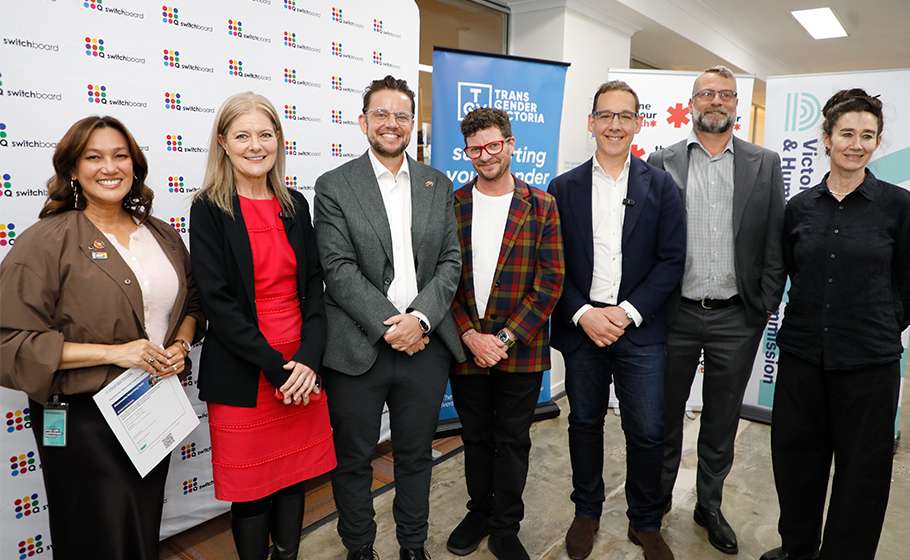
In its submission to the inquiry, Switchboard Victoria noted that LGBTIQA+ people are twice as likely to experience online hate compared to the national average.
Committee Chair Joe McCracken said the inquiry highlighted the serious impact of hate-motivated offending and the need for a coordinated response across policing, the justice system, education and online platforms.
Significant under-reporting
The report also suggests that the true extent of anti-LGBTQIA+ hate crime may be significantly higher for two main reasons:
Evidence was given that historical persecution of the LGBTIQA+ community by the police and other institutions, as well as LGBTIQA+ people being dismissed and victim‑blamed when reporting their experiences, has taught the LGBTIQA+ community to be “hesitant” to go to law enforcement.
Academic Jarryd Bartle told the Committee that under‑reporting also stemmed from Victoria Police “not classifying certain offences as prejudice motivated”.
To successfully combat hate crime, accurate data needs to be collected to reflect what it actually looks like and how it happens.
Recommendations given to the inquiry to improve data collection included the establishment of a community‑led LGBTIQA+ hate crime survey or register, reforming systems, including Victoria Police, to better capture data on LGBTIQA+ people, and providing assistance to LGBTIQA+ victim-survivors to navigate the justice system.
View this post on Instagram
What happens now?
The report introduced 35 recommendations on how to reduce anti-LGBTIQA+ hate crime in Victoria.
Firstly, though, it noted how clear it is that current strategies and resources for combating anti-LGBTIQA+ hate crime are scattered and disconnected, and that this lack of coordination is a key problem.
Dr Sean Mulcahy from the Victorian Pride Lobby told the Committee that the most ‘effective’ way to combat hate crimes was to develop a whole‑of‑government hate crimes prevention plan. The report recommends that this plan take the form of three main initiatives.
Three key recommendations include:
Education initiatives
Education initiatives, particularly aimed at young people, would aim to challenge and divert anti-LGBTIQA+ hate before any crime is committed. Because social media algorithms and violent online communities have helped to encourage and disseminate anti‑LGBTIQA+ sentiment, this would include digital media literacy education to combat absorption of misinformation that feeds radical hate.
Improvements to platform safety and moderation
Both social media and online dating platforms were found to exacerbate danger to LGBTIQA+ individuals.
Recommendations to reduce the harm caused by social media focused on algorithms that serve “manosphere” content to boys and men.
Stakeholders specifically called for greater oversight into how platforms identify and remove hateful content, and for social media companies to be held accountable for moderating online behaviour involving threats, harassment, doxxing, targeted intimidation or the luring of victims.
The report also identified opportunities to improve user safety on online dating platforms, including stronger age and identity verification measures, enhanced reporting systems, clearer safety warnings and greater cooperation with law enforcement agencies.
Legislative reform
The inquiry heard that legislative responses to anti‑LGBTIQA+ hate should aim to prevent hate before it escalates, rather than only holding perpetrators to account after harm has been done.
The report recommends the Victorian Government advocate to the Commonwealth Government for a nationally consistent definition of “hate crime”, as well as further changes to Victorian vilification laws following the addition in 2025 of two new hate speech and conduct offences.
Community response
“This report is a stark acknowledgement of the scale and impact of anti-LGBTIQ+ hate in Victoria,” said Equality Australia Legal Director Heather Corkhill.
“LGBTIQ+ people are being deliberately targeted because of who they are, including through increasingly serious and violent attacks. We cannot dismiss this as isolated incidents or fringe behaviour.
“This is targeted hate, and it demands an immediate and serious response.”
Chad Hughes, CEO of Thorne Harbour Health, called for immediate action.
“Every day, our staff sit with LGBTIQA+ people who carry the trauma of being targeted for who they are. Giving evidence to this inquiry meant we could bring those stories directly to government, and the inquiry’s findings confirm what we’ve been hearing in our services for years: this hate is real, it’s widespread, and it’s causing lasting harm.
“Now we need to see that translated into action. Victoria and the Commonwealth have a roadmap in front of them. It’s time to commit to it, and to fund the community organisations already doing the work of keeping our people safe.”
Read the full report here.
For the latest LGBTQIA+ Sister Girl and Brother Boy news, entertainment, and community stories in Australia, visit qnews.com.au. Find us on Facebook, Instagram and YouTube.