
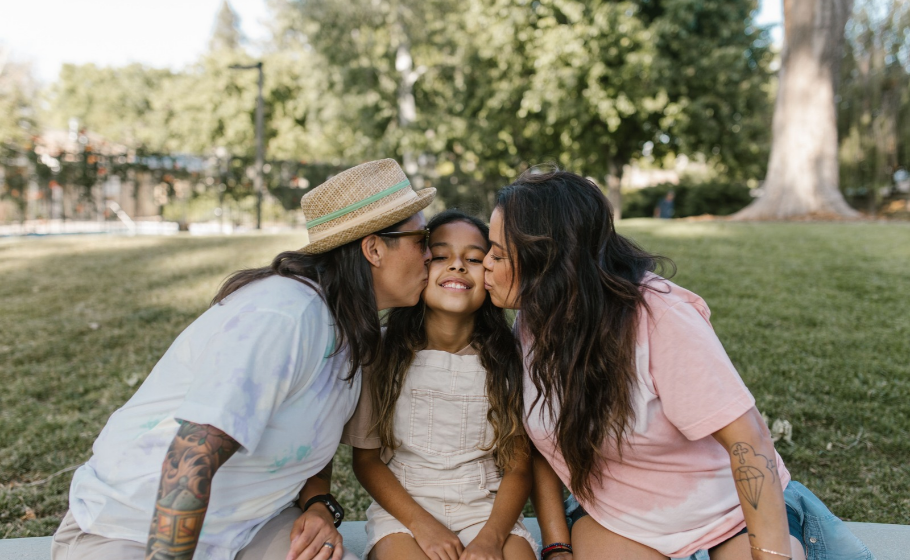
Rainbow Families Australia has released the findings of their groundbreaking national study into LGBTQIA+ families, the Thriving Families, Unequal Burdens report.
Rainbow Families conducted the survey between November 2025 and March 2026, out of a need to find out who is in our community, where they live, their experiences, and what supports they require.
Thriving Families, Unequal Burdens is the first report that specifically addresses these questions and delivers vital insights into our families, which can be used to support future advocacy, social policy, and community frameworks.
In total, the report makes seven specific recommendations to the community, service providers and policymakers.
Related content:
- Rainbow Families set the record straight, perfectly unpacking online hate
- SA birth certificate reform a ‘positive step forward for rainbow families’
- NSW Government invest to expand Rainbow Families LGBTQIA+ antenatal programs
Who was included in the survey?
The study was undertaken by 1,295 households, who reported 1,504 identity selections.
Many families identified across more than one group; for example, a single family with both bisexual and lesbian parents, who could be cisgender and trans.
The vast majority of participants identified as cisgender women (67%) who identified as lesbians (42%).
Just under 12% of the sample identified as trans or gender diverse, with more transgender men (2%) than trans women (1%).
In keeping with the high number of cisgender lesbian parents, families were most likely to be formed through donor conception, though surrogacy was used by some gay men.
The majority of participants were under the age of 45 years (65%); however, 24.9% were between 45 and 55 years, and 2.2% were over the age of 65.
 Image: Rainbow Families
Consistent with the national average, just over three per cent of rainbow parents identified as Aboriginal and/or Torres Strait Islander. However, when asked to identify their primary cultural identity, only 2.7% chose “Aboriginal Australian”, perhaps reflecting the gap between biological and cultural connection to indigeneity.
The vast majority of rainbow families reported no religious affiliation (80.3%), which is significantly higher than the national average (38.9%). The only religious identification that was consistent with or higher than national averages was Judaism (up to 1.0% nationally, 1.2% of our sample).
The vast majority of participants lived in or around Australia’s capital cities (79.2%), with 32.7% living in urban areas, and an additional 46.5% living in suburban areas of capital cities — significantly higher than the national average of 67%.
This gap is unsurprising given the high reported levels of heterosexism and cissexism in regional, rural and remote communities.
Rainbow families are “thriving”
Overall, the report indicates that LGBTQ+ parents have fostered home environments where their children are safe, loved, cared for and enabled to thrive. 87% of families are happy, and 93% say their children are happy.
Almost all participants have friends they can rely on, and 89% report little or no family conflict.
Notably, Rainbow Families reported exceptionally strong friendship, family and community connections. 80% regularly connect with extended family in person, compared with 51% of Australian families.
LGBTQIA+ families also experienced higher than average housing stability, including greater rates of home ownership.
This is unexpected given that LGBTQ+ Australians are more than twice as likely to experience homelessness as the Australian population, with one in five trans and gender diverse people experiencing homelessness at some point in their lives.
The high rates of secure housing and home ownership may be related to the economic costs of LGBTQ+ family formation.
Rainbow families also reported very low levels of conflict at home, contrasting with a previous study conducted by the Australian Institute of Family Studies.
Almost nine in ten (89%) reported experiencing no (14.8%) or a little (74.3%) conflict in their families.
Overall, the report shows that LGBTQIA+ parents are building strong, loving, and resilient families who love to spend time together.
View this post on Instagram
Challenges for LGBTQIA+ families
While the overall picture is extremely positive, the findings also identify a smaller group of rainbow families experiencing significantly poorer family wellbeing.
The findings suggest that this is not a reflection of failings or deficits in rainbow families themselves, but of the greater pressures and barriers some families face in their everyday lives caused by discrimination.
Household stress is generally higher in mixed gender couples, families with at least one trans or gender diverse parent, sole-parent families, and co-parenting families. Gay and lesbian couples consistently reported the lowest levels of stress.
More than one in three rainbow families faced exclusion, bullying or discrimination, with these experiences being more common for those living outside metropolitan areas, highlighting the need for greater resources and support.
Discrimination and bullying were most common in regional and rural areas, with the highest rates reported in South Australia and the lowest in New South Wales.
Children in rainbow families also experienced exclusion, bullying and discrimination because of their parents’ identities and/or their family structures, particularly at school.
Rainbow families experienced particularly high levels of discrimination when interacting with health services. This was especially prevalent in maternity, IVF, specialist, and healthcare services, which showed a lack of inclusion.
Many parents described being forced to repeatedly come out when trying to engage with services, and as a result, they were not always guaranteed access to the support they needed.
The report’s recommendations
The Thriving Families, Unequal Burdens report made seven recommendations based on its findings:
- Recommendation 1: continued and expanded research involving rainbow families.
- Recommendation 2: equitable pathways to parenthood, for example, ensuring that laws and policies reflect the diversity of modern families.
- Recommendation 3: addressing barriers for some rainbow families, such as investing resources in supporting rainbow families in regional, rural and remote areas, and families with gender diverse parents.
- Recommendation 4: listening to and including families in policy developments
- Recommendation 5: addressing discrimination, for example amending the Sex Discrimination Act to ensure that ‘association’ is covered as a protected attribute, to ensure coverage for children who experience discrimination because of their parent’s sexuality or gender identity, and reviewing Paid Parental Leave policy.
- Recommendation 6: improving service inclusion, in particular health systems
- Recommendation 7: accessible education for children in rainbow families. The report suggests that education departments, curriculum authorities, and schools should review curriculum, resources and activities to ensure the delivery of inclusive education that represents the diversity of modern families, as well as providing training for teachers and staff.
 Image: Rainbow Families Queensland
The groundbreaking study by Rainbow Families into the experiences and realities of LGBTQIA+ families shows broadly very positive outcomes.
Though the Thriving Families, Unequal Burdens report explores certain challenges faced by rainbow families, such as bullying and discrimination, it also found extremely encouraging trends.
LGBTQIA+ families have exceptionally high rates of community support, especially from extended family and friends, and greater economic and housing stability than national averages.
For the latest LGBTIQA+ Sister Girl and Brother Boy news, entertainment, and community stories in Australia, visit qnews.com.au. Find us on Facebook, Instagram and YouTube.


