A Tasmanian parliamentary inquiry has found bullying, discrimination and harassment are “real and persistent problems” across the state’s schools, with LGBTQIA+ and First Nations students and staff among those experiencing discrimination at disproportionate rates.
The final report of the Inquiry into Discrimination and Bullying in Tasmanian Schools also found that Catholic Education Tasmania had “discriminated against staff on the basis of sexual orientation and marital status”.
The committee said such discrimination was “prima facie”, meaning it appears at first sight to be contrary to Tasmania’s Anti-Discrimination Act 1998.
Catholic Education Tasmania maintains it complies with the Commonwealth Sex Discrimination Act, contesting the finding.
The report makes 33 recommendations, including stronger protections for transgender and gender-diverse students, increased support for students and staff, mandatory training for teachers and a review of Tasmania’s anti-discrimination laws.
Related content:
‘Bullying, discrimination and harassment are real and persistent problems’
The committee heard evidence from across government, Catholic and independent schools. It found that while they “pledge commitments” to anti-discrimination and anti-bullying policies, evidence received suggests the application of these policies vary greatly.
The committee also found that certain groups experience discrimination and bullying in schools to a greater extent, particularly students and staff with disability, gifted individuals and members of the LGBTIQA+ community.
“Existing policies and procedures, and their implementation across educational sectors, as they relate to members of the LGBTIQA+ community are inadequate and inconsistent,” the findings say.
It found this can lead to a lack of adequate support for LGBTQIA+ students and staff.
The inquiry also found a lack of training for teaching and support staff around LGBTQIA+ inclusion, understanding and the management of discrimination and bullying.
For transgender and gender-diverse students, the committee found they are “not always appropriately supported” when it comes to name changes, bathroom and changing facilities, and responses to discrimination and bullying.
The committee also noted national data indicates Aboriginal people experience discrimination and bullying at disproportionate rates.
Equality Tasmania labelled the findings “disturbing” and has called on the Government to act.
“This inquiry has produced disturbing evidence of discrimination and bullying in both the government and non-government school sectors in Tasmania,” Equality Tasmania spokesperson, Rodney Croome, said.
Queer and trans students told the inquiry what happened to them
The findings follow months of testimony from students and staff who shared their experiences of discrimination and bullying with the inquiry.
Grade 12 student at St Patrick’s College and young trans woman Amilie Courtney told the inquiry she had experienced “isolation, exclusion, bullying and abuse” because she is trans.
“No child should have to trade their dignity for an education,” Courtney said. “No child should be isolated to make adults more comfortable.
“And no child should grow up learning that who they are is a problem.”
Queer trans man Leon Pecl, who ho identified as a lesbian when at an all-girls Catholic school in Hobart, also told the inquiry that policies against homophobia and transphobia at his school were not enforced.
“And bullying and ostracism against queer people went unchallenged and unchecked,” Pecl said.
“I told the committee that it’s time for all students to feel safe at school.”
The inquiry’s final report now recommends that all Tasmanian schools implement policies and procedures supporting transgender and gender-diverse students to use their preferred names.
It also recommends that schools provide individual-stall unisex bathrooms as part of upgrades and redevelopments, and that the Government work with non-government schools to ensure consistent policies and facilities for transgender and gender-diverse students.
Catholic Education Tasmania accused of discriminating against staff
One of the inquiry’s most significant findings concerned Catholic Education Tasmania (CET).
The committee found that CET had “discriminated against staff on the basis of sexual orientation and marital status”.
It said that discrimination on those protected attributes contravenes Tasmania’s Anti-Discrimination Act.
However, CET has argued that its employment practices comply with the Commonwealth Sex Discrimination Act.
The committee noted that Tasmania’s state and Commonwealth anti-discrimination laws operate concurrently, and that their application to employment in faith-based schools has not yet been determined by a court.
Equality Tasmania has taken a stronger position, accusing CET of deliberately discriminating against LGBTIQA+ people.
“Most disturbing of all is the finding that Catholic Education Tasmania has contravened Tasmania’s Anti-Discrimination Act by deliberately discriminating against LGBTIQA+ people in its schools,” Croome said.
“We are particularly concerned by evidence that gay teachers in Catholic schools have not been promoted to positions they are qualified for, and that transgender students have not been recognised for who they are and have been sent to counsellors who endorse conversion practices.”
Equality Tasmania said it will write to the Anti-Discrimination Commissioner and the Non-Government Schools Registration Board asking them to initiate inquiries into discrimination against LGBTIQA+ staff and students in Catholic schools.
“For non-government schools to be registered in Tasmania they must uphold the law and by its own admission Catholic Education Tasmania has not upheld the Anti-Discrimination Act,” Croome said.
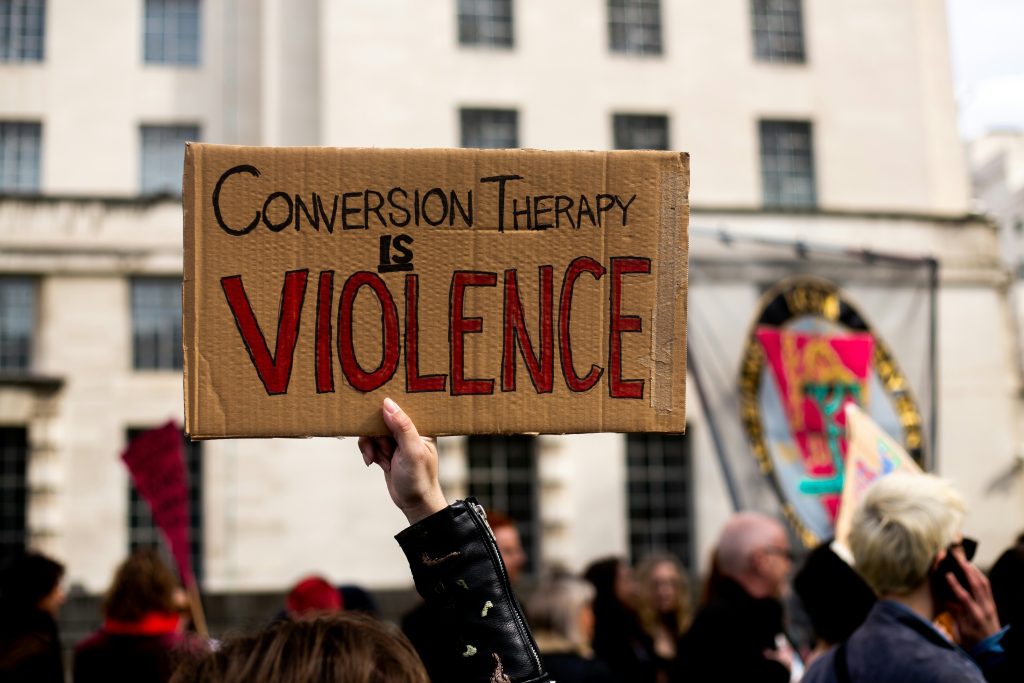
Equality Tasmania also said it would increase its advocacy for a ban on conversion practices, citing evidence that some Catholic school students may have been exposed to such practices.
What are some of the recommendations from the inquiry?
Alongside its recommendations around LGBTQIA+ students, the committee has called for broad changes to the way Tasmanian schools prevent and respond to bullying and discrimination.
The recommendations include:
- all schools actively implementing their anti-discrimination and anti-bullying policies
- increased specialist and mental health support in government schools
- mandatory and ongoing teacher training in behaviour management and conflict resolution
- implementing policies and procedures that support the use of transgender or gender-diverse students’ preferred names
- all schools provide individual stall unisex bathrooms where possible
- greater education for students about what discrimination and bullying is, how to identify it and how to report it
- increased professional development for school staff around discrimination and bullying policies
- an audit of the application of discrimination and bullying policies across all Tasmanian schools
- a review of the Anti-Discrimination Act, including its obligations to prevent and prohibit discrimination and bullying in schools.
The committee also recommended that undergraduate teaching courses provide more training around discrimination and bullying, particularly in relation to LGBTIQA+, disability and gifted students.
For the latest LGBTIQA+ Sister Girl and Brother Boy news, entertainment, and community stories in Australia, visit qnews.com.au. Find us on Facebook, Twitter, Instagram and YouTube.