
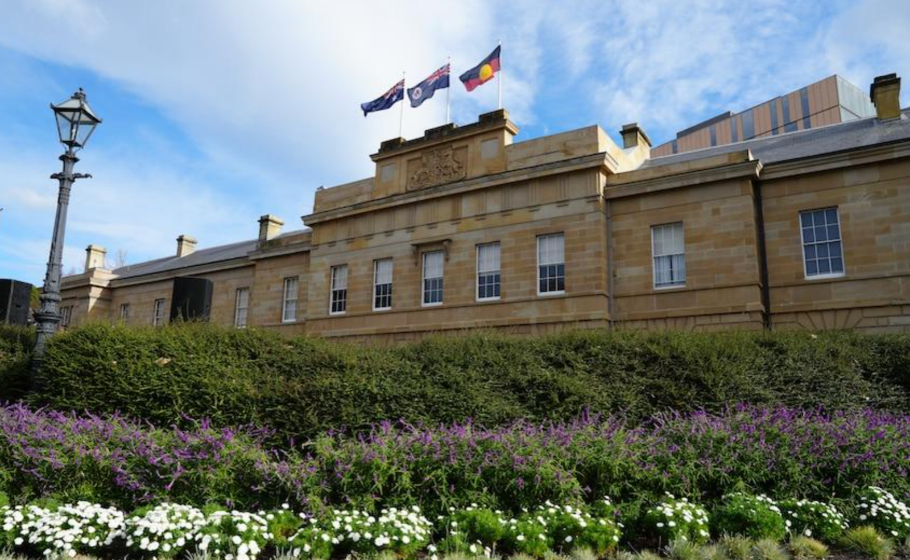
Tasmania could finally ban conversion practices under legislation now before Parliament. Opponents are raising alarms about parents, doctors and prayer. We read the bill to find out what it would actually ban, and what it wouldn’t.
After years of reports, consultations, draft laws and political back-and-forth, Tasmania finally has a conversion practices bill before parliament.
Greens leader Rosalie Woodruff introduced the Conversion Practices Prohibition Bill 2026 on September 10, four years after the Tasmania Law Reform Institute (TLRI) found conversion practices were still occurring in the state and had caused severe harm.
Yes, still occurring. In Tasmania. In the 2020s.
The TLRI found evidence of people being subjected to practices intended to change, suppress or eradicate their sexual orientation or gender identity, and recommended legal reform.
Tasmania’s Liberal government subsequently developed its own draft legislation in 2023. Premier Jeremy Rockliff had backed the principle of banning conversion practices, but when his government produced a bill, LGBTQIA+ advocates argued it fell well short.
Among their concerns were broad exemptions for health and religious settings, a defence where an adult consented to conversion practices despite the potential for harm, and the absence of civil penalties recommended by the TLRI.
Equality Tasmania warned the loopholes were so significant that conversion practices could continue even if the legislation became law.
That proposal never made it to parliament.
The Greens then spent two years developing an alternative with legal experts and people with lived experience. After more than a dozen drafts, it went out for public consultation earlier this year before a revised version was tabled.
Now comes the politics of it all. Rockliff’s Liberals will have a conscience vote, meaning MPs are free to vote according to their own position rather than along party lines.
View this post on Instagram
Police Minister Felix Ellis has argued the bill threatens the ability of doctors and parents to take a cautious approach to young people questioning their gender.
Former deputy premier Michael Ferguson, now a Liberal backbencher, says its definition of conversion practices is so broad it could interfere with ordinary conversations about sex and gender and religious freedom.
Deputy Premier and Attorney-General Guy Barnett has called the proposal “fundamentally flawed”, warning about conversations between parents and children and prayer in religious settings.
Rockliff, meanwhile, still supports banning conversion practices in principle, but has raised concerns about the Greens’ legislation.
So, what does the bill actually say?
Related content:
- Tasmania’s most advanced prohibition of conversion therapy is under threat
- Hopes for new Tasmanian ban on conversion practices
- These conversion therapy survivors are still dealing with the trauma
First, what would count as a conversion practice?
Under the bill as introduced, a conversion practice is conduct directed towards someone because of their sexual orientation or gender identity, for the purpose of changing, suppressing or eradicating it, or inducing that person to do so themselves.
The purpose is important. The bill isn’t attempting to make every difficult, conservative or potentially offensive conversation about sexuality and gender a conversion practice.
Conduct has to be directed towards a particular person because of their sexual orientation or gender identity and have the purpose of changing, suppressing or eradicating it, or inducing them to do so.
Someone also can’t sidestep the definition simply because the person subjected to the practice agreed to it. The bill expressly says consent is irrelevant. Then come the carve-outs.
View this post on Instagram
The bill spells out a fairly extensive list of things that do not, of themselves, constitute conversion practices: public debate, expressions of religious belief, prayer, parents discussing sexuality or gender with their children, good-faith healthcare, discussing treatment and non-treatment options, identity exploration and conversations about detransition.
Those aren’t hypothetical edge cases. Parents, doctors and religious freedom have become central to the case being made against the bill. But the bill explicitly addresses each of them.
The real question is where those protections end, and when something presented as parenting, healthcare or religious practice crosses the line into an attempt to change or suppress an LGBTQIA+ person’s sexuality or gender identity.
So, let’s take the claims one at a time.
CLAIM: Parents could be prosecuted for talking to their children about sex or gender
Parents have become a major part of the argument against the bill.
Barnett has warned it risks criminalising certain conversations between parents and children, while Ferguson argues parents must remain free to reassure, question and sometimes disagree with a child questioning their sex or gender.
WHAT THE BILL ACTUALLY SAYS
Parents are specifically mentioned.
A parent discussing sexual orientation, gender identity, sexual activity or religion with their child does not, of itself, constitute a conversion practice.
There is some important legal language doing work there: “of itself”.
Being a parent isn’t a blanket exemption. But the subject of a conversation isn’t what makes it a conversion practice either. A parent can discuss sexuality or gender and express a view. Their conduct would have to independently meet the bill’s definition before the prohibition applied.
There is another wrinkle when children are involved, which we’ll get to.
CLAIM: Doctors could be punished for taking a cautious approach to gender transition
Ellis has argued a doctor, psychologist, counsellor or parent could “face the law” for taking a careful or cautious approach with a young person experiencing distress about their gender rather than moving towards medical transition.
Ferguson has raised similar concerns about counselling someone against transition or helping someone who wants to detransition.
WHAT THE BILL ACTUALLY SAYS
The legislation deals with healthcare in considerable detail.
A health service provided by a registered health practitioner is excluded from the definition of a conversion practice if the practitioner considers it appropriate in good faith and it complies with all relevant legal, professional and ethical requirements.
“Good faith” isn’t a free pass for a health professional’s personal beliefs about sexuality or gender. Their care still has to meet the standards governing their profession.
The bill explicitly protects providing information in good faith about treatment and non-treatment options, including their risks, benefits, limitations and uncertainties.
Helping someone explore their identity without “directing, predetermining or seeking to influence” them towards a particular outcome also does not, of itself, amount to a conversion practice.
And the bill specifically protects discussions between a health practitioner and patient about a desire to “detransition, desist, reverse, discontinue or modify” a social or medical transition.
In other words, the bill does not say doctors must push a patient towards transition. Several of the scenarios being raised by opponents are already expressly addressed in the legislation.
But healthcare isn’t automatically exempt simply because it happens in a clinic. If conduct otherwise meets the definition of a conversion practice, calling it healthcare isn’t a shield.
That distinction matters because healthcare itself has historically been one of the settings in which conversion practices have occurred. The TLRI investigation considered purported therapy, counselling and treatment alongside practices occurring in religious and community settings.
CLAIM: The bill could criminalise prayer
Religion is where the line becomes particularly interesting.
Barnett has warned the legislation risks criminalising “conversations and/or prayers in a church or religious setting”.
Ferguson acknowledges the bill contains protections around prayer, but argues pastoral prayer could nevertheless fall within its broader definition of a conversion practice.
WHAT THE BILL ACTUALLY SAYS
So yes, prayer is quite literally addressed in the bill.
An expression of religious belief or principle, including through prayer, does not of itself constitute a conversion practice.
Neither does stating what a religion teaches about a particular subject or expressing the view that a religious belief or principle ought to be followed.
The bill also says general requirements relating to religious orders, or membership or leadership of a religious community, do not of themselves constitute conversion practices.
Put more plainly: churches can continue preaching that homosexuality is sinful, insisting people abstain from same-sex relationships and setting conservative rules around membership or leadership.
The bill isn’t staging an intervention on homophobic theology, don’t worry, Barnett.
It draws the line when those beliefs become a targeted attempt to change or suppress an LGBTQIA+ person’s sexuality or gender identity.
Under the bill, describing conduct as prayer, pastoral care or religious counselling would not automatically put it outside the definition if it otherwise meets the test for a conversion practice.
And much like in the case of healthcare, that distinction matters because religion obviously isn’t incidental to the history of conversion practices.
The TLRI investigation considered conversion practices occurring in religious and spiritual settings while distinguishing them from ordinary expressions of religious belief.
So the question isn’t really whether the bill “bans prayer”. It expressly protects prayer and religious expression.
The more substantive debate is where the line between protected religious practice and prohibited conversion practice should sit.
Opponents, including Barnett, Ferguson and the Australian Christian Lobby, argue the protections don’t go far enough.
But the legislation leaves considerable room for religious belief, including beliefs many queer people may find discriminatory or deeply unpalatable. What it seeks to remove is the room to turn those beliefs into a practice directed at changing or suppressing the LGBTQIA+ person sitting in front of you.
And given the TLRI found conversion practices were still occurring in Tasmania, including in religious and spiritual settings, that’s not an entirely theoretical distinction.
“Prayer will be banned” rather spectacularly misses it. Prayer isn’t the target. Conversion practices are.
CLAIM: The bill threatens parents, counsellors and religious people with criminal prosecution
The Australian Christian Lobby, which opposes the legislation, has warned of criminal prosecution arising from conversations, counselling, prayer and pastoral care.
There are criminal offences in the bill. But there is a sizeable gap between conduct meeting the general definition of a conversion practice and someone being convicted of its principal criminal offence.
WHAT THE BILL ACTUALLY SAYS
The bill separates the general prohibition on conversion practices from criminal punishment.
Much of the proposed system is instead built around prevention, education and civil remedies.
People could report conversion practices to a new Conversion Practices Commissioner, a role the bill assigns to Tasmania’s existing Anti-Discrimination Commissioner.
The Commissioner could then provide targeted education, facilitate resolutions, investigate serious or systemic practices, and use mechanisms including compliance notices and enforceable undertakings.
A person affected by a conversion practice could also take a matter to the Tasmanian Civil and Administrative Tribunal, which could make orders including compensation and targeted education.
A criminal conviction is not therefore the only legal response available under the bill. And the threshold for criminal prosecution is considerably high.
For the principal criminal offence, a person must intentionally engage in a conversion practice directed at another person. That practice, or multiple practices considered together, must cause physical injury or harm to the person’s mental health. The person responsible must also have been negligent about whether that injury would occur.
And the bill specifically says distress, grief, fear or anger alone do not amount to harm to mental health unless they result in psychological harm.
Conversion practices can involve LGBTQIA+ people being told, sometimes repeatedly and over long periods, that something fundamental about them should be changed or suppressed. Yet causing distress or fear would not necessarily be enough to trigger criminal liability unless it resulted in the psychological harm required by the legislation.
That doesn’t make conduct falling below that threshold lawful. It could still be prohibited and dealt with through the bill’s civil and regulatory system. It means the bar for treating it as a crime is higher.
There is also a separate indictable offence for taking, or arranging to take, someone outside Tasmania intending that they undergo conversion practices, where those practices occur and cause injury.
Advertising conversion practices is treated differently again. It would carry a maximum fine of 60 penalty units for an individual or 300 for a corporation.
One Tasmanian penalty unit is currently worth $213, putting those maximum advertising fines at $12,780 and $63,900 respectively.
That doesn’t quite mean someone who commits the bill’s injury-based conversion-practice offence can simply pay a fine and move on. But getting to the criminal prosecution point requires considerably more than proving an offensive, upsetting or even prohibited conversation took place.
Prosecutors would need to prove the conduct was a conversion practice, that it was intentional, that it caused the injury required by the offence and that the person responsible was negligent as to whether that injury would occur.
A prosecution for the injury-based offences would also require the written consent of Tasmania’s Director of Public Prosecutions.
So, could someone go to prison for carrying out conversion practices under this bill? Yes.
Could a parent, pastor or counsellor be sent to prison simply for having one of the conversations opponents keep pointing to? That is not what the criminal offence says.
The bill also raises the inverse question for LGBTQIA+ Tasmanians: how readily would a conversion practice actually meet the criminal threshold?
While Equality Tasmania supports the bill’s combination of criminal penalties, civil remedies, education and prevention, it points to research linking conversion practices with serious and long-term psychological harm. It also describes religious conversion ideology as something that can be internalised over years, slowly eroding a person’s identity.
Yet distress, grief, fear or anger alone would not satisfy the bill’s definition of mental-health harm unless it resulted in psychological harm. Prosecutors would also have to establish every other element of the offence.
But amid warnings that parents, pastors and counsellors could face criminal prosecution, there is another side of the equation worth scrutinising: how readily would conversion practices that cause serious or cumulative harm actually meet the threshold for criminal prosecution?
And what about children?
This is one of the areas where the bill changed substantially between consultation and parliament.
The Greens’ earlier consultation draft contained a standalone criminal offence for intentionally engaging in a conversion practice directed towards a child without requiring prosecutors to establish injury.
That offence is not in the bill now before Parliament.
Instead, prosecutors would first have to establish the same injury-based offence that applies where the person subjected to the practice is an adult.
If the person was a child, or an adult with impaired decision-making ability, the court would then be required to treat that vulnerability as an aggravating factor when sentencing.
In plain English: being a child can make the punishment more serious once the criminal offence has been proved. It no longer removes the requirement to prove injury in the first place.
That’s a significant narrowing of the criminal provision from the consultation draft, particularly given the bill itself recognises children as being particularly vulnerable to conversion practices and their harms.
The final bill does retain protections specifically relevant to children elsewhere.
It would bring conversion practices directed at children within parts of Tasmania’s child-safety framework and amend the Limitation Act so a conversion practice directed towards a child can fall within its definition of “child abuse” for those purposes.
So the debate around children is more complicated than either “parents will be criminalised” or “nothing changed”.
Compared with the Greens’ consultation draft, the final bill no longer creates a separate criminal offence for intentionally engaging in a conversion practice directed at a child without proof of injury.
For a bill whose guiding principles expressly recognise children as particularly vulnerable, that change is worth paying attention to.
CLAIM: Everyone would have to report suspected conversion practices
The Australian Christian Lobby has also raised concerns about mandatory reporting under the legislation.
WHAT THE BILL ACTUALLY SAYS
The final bill does not create a general mandatory-reporting obligation requiring every Tasmanian to report suspected conversion practices.
It requires specified public office-holders and bodies to refer matters to the Conversion Practices Commissioner where information received through their official functions gives them reasonable grounds to believe a conversion practice has occurred or is occurring.
They include the Health Complaints Commissioner, Commissioner for Children and Young People, Independent Regulator, Custodial Inspector, Commissioner of Police, Integrity Commission, Public Guardian and Chief Psychiatrist. The bill also allows additional people or bodies to be prescribed.
That’s quite different from imposing a general legal duty on ordinary Tasmanians.
There is another protection worth knowing about
For all the debate around what the bill might capture, there is one change that has received considerably less attention.
The bill would expand Tasmania’s statutory definition of sexual orientation to expressly include an absence of emotional, affectional or sexual attraction, or an absence of intimate or sexual relationships.
The wording expressly captures an absence of attraction, a feature associated with asexual and aromantic identities that can otherwise be overlooked in sexuality legislation.
It’s a relatively small piece of drafting in an 88-page bill. But for communities whose identities can be overlooked even within LGBTQIA+ legislation, it isn’t an insignificant one.
So, what would the bill actually change?
The bill would establish an Education, Prevention and Response Scheme administered by the Conversion Practices Commissioner, allowing reports that never reach the criminal threshold to be dealt with through education, resolution, investigation and civil mechanisms.
It also introduces a positive duty requiring people and organisations to take reasonable and proportionate measures to eliminate conversion practices engaged in by them or by people acting on their behalf.
That’s important, because conversion practices don’t necessarily happen as isolated encounters between two people. They can occur within institutions, religious communities, counselling environments and other systems.
 Tasmanian Greens leader Rosalie Woodruff introduced the Conversion Practices Prohibition Bill 2026 to parliament in September. Photo: Tasmanian Greens.
The bill isn’t designed only to respond after an individual survivor establishes criminal harm. It also creates obligations aimed at prevention and powers to investigate serious or systemic practices.
When responding to reports, the Commissioner would also have to consider the wishes, safety and wellbeing of people affected, including risks such as coercion, abuse, retaliation and social exclusion.
So yes, the final bill contains a long list of carve-outs covering public debate, religious expression, prayer, parental discussions, healthcare, identity exploration and detransition.
But those carve-outs sit alongside a system designed to reach conduct whose purpose is to change, suppress or eradicate someone’s sexual orientation or gender identity.
That’s the balancing act at the centre of the legislation. Whether every line has been drawn correctly is now a question for parliament.
Whether the bill simply bans prayer, cautious healthcare or parents talking to their children is a different question. The text is considerably more specific than that.
Haven’t we been here before?
Very much so.
It feels faintly extraordinary that this still needs saying in 2026, but conversion practices are not simply a grim relic from queer history.
The Tasmania Law Reform Institute reported in 2022 that they were still occurring in Tasmania, posed a continuing risk to LGBTQIA+ people and had caused severe harm.
Importantly, it didn’t recommend criminalising every difficult conversation around sexuality, gender or religion. Its work grappled with legitimate healthcare, parental guidance and expressions of faith too.
In other words, parents, doctors and prayer weren’t suddenly discovered as potential complications in September 2026. They have been part of the debate for years. The disagreement is over where the line should be.
What happens now?
The Conversion Practices Prohibition Bill 2026 has had its first reading in Tasmania’s House of Assembly. It has not yet passed either house of parliament.
Labor and several crossbench MPs have indicated support.
The governing Liberals will vote according to conscience rather than as a bloc. Ellis and Ferguson have confirmed they will vote against the bill, Barnett has been among its most prominent critics, and Liberal Primary Industries Minister Gavin Pearce has said he cannot support it in its current form.
Rockliff supports a ban in principle while several senior members of his government oppose the Greens bill in its current form. He has said he will consider amendments that “strengthen safeguards and improve the bill”.
After years of debate, Tasmania isn’t starting from scratch on whether conversion practices exist or can cause harm. Its own law reform institute found evidence of both four years ago.
The question now before parliament is what the state should do about them, and where the law should draw the line between protected conversation, belief and healthcare, and conduct intended to change or suppress someone’s sexual orientation or gender identity.
For the latest LGBTQIA+ Sister Girl and Brother Boy news, entertainment, and community stories in Australia, visit qnews.com.au. Find us on Facebook, Twitter, Instagram and YouTube.




I’m boycotting any travel whatsoever to TAS and WA including goods, until they both implement laws on banning conversion therapy practices.