A new Human Rights Watch investigation has documented mass arrests, forced HIV testing and growing fear among LGBTQ+ people in Senegal, just weeks before the country hosts Africa’s first Olympic event.
In less than three weeks, Senegal will make sporting history when it becomes the first African country to host an Olympic event. But as preparations for the Youth Olympic Games enter their final stages, a new investigation has exposed a troubling reality for LGBTQIA+ people living in the host nation.
Human Rights Watch (HRW) has documented mass arrests, forced HIV testing and barriers to legal representation amid an escalating crackdown on LGBTQIA+ Senegalese people.
Published on October 12, the investigation describes people going into hiding, avoiding medical appointments and struggling to find lawyers willing to represent them. Some have reportedly fled the country altogether.
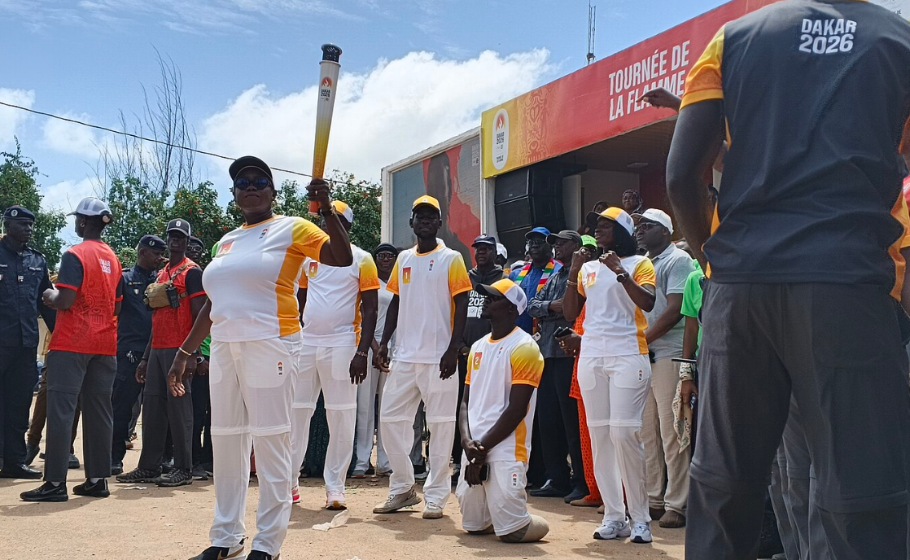
The findings arrive just ahead of the Dakar 2026 Youth Olympic Games, which begin on October 31 and will bring around 2,700 young athletes to Senegal.
It’s a historic moment for African sport. It’s also one that raises questions about how the Olympic movement’s commitment to equality sits alongside the treatment of LGBTQIA+ people in its host countries.
Related Content:
- First prosecution under Senegal’s new harsher anti-gay law
- Queer highlights we loved from the 2026 Winter Olympics
- Rui Takahashi came out. Now fellow Japanese volleyball star Reon Arao is following his lead
Senegal’s anti-LGBTQ+ laws have become even harsher
Same-sex sexual activity has been illegal in Senegal since 1965. In March this year, parliament approved amendments to the country’s penal code that doubled the maximum prison sentence for consensual same-sex conduct from five to 10 years.
The changes went further than increasing prison terms.
They also introduced broadly worded offences targeting the “promotion” or “glorification” of homosexuality, as well as financial or other support for LGBTQIA+ people and organisations. Those convicted under the new provisions can face up to seven years in prison.
The legislation passed overwhelmingly, with 135 votes in favour, none against and three abstentions. Arrests had already begun to escalate in February, before the amendments were adopted.
According to figures collected by Senegalese human rights organisation RADDHO, at least 212 people were arrested between February and July. The HIV Justice Network reported more than 300 arrests over the same period.
Human Rights Watch said it could not independently verify the total number, but its investigation paints a picture of how widely the crackdown is being felt.
Researchers interviewed 39 people, including former detainees, lawyers, healthcare workers and members of Senegal’s queer community.
Some described police using information extracted from confiscated phones to identify other suspected LGBTQIA+ people. Others reported raids on private premises, allegations made by neighbours and fears that even ordinary social interactions could attract police attention.
One 23-year-old man told researchers he was arrested alongside friends while preparing for a fashion show at his home in Thiès in December 2025. He alleged that officers confiscated their phones, detained them and subjected them to physical abuse. The charges were eventually dropped for lack of evidence.
And for those living under the threat of arrest, the consequences can begin long before a case reaches court.
When seeking healthcare becomes a risk
Perhaps the most alarming aspect of the investigation concerns HIV testing and treatment.
Human Rights Watch documented allegations that detainees were subjected to HIV tests without their informed consent, with results subsequently used to pursue additional criminal charges.
Of those arrested during the crackdown, 82 were also charged with alleged voluntary HIV transmission, although a court dismissed those charges in August.
Health professionals warned that the practices were undermining trust in medical services, with people increasingly afraid that seeking treatment could expose them to police scrutiny or unwanted disclosure of their HIV status.
One doctor in Dakar told researchers that around a third of patients had stopped attending their HIV treatment appointments.
The implications are serious. HIV treatment is essential not only for an individual’s health but also for preventing transmission. When people feel unsafe accessing care, the consequences extend well beyond those directly targeted by police.
There is also a contradiction within Senegal’s own legal framework. The country’s 2010 HIV/AIDS law protects medical confidentiality and informed consent, including safeguards against mandatory HIV testing of detainees.
In March, UNAIDS warned that tougher anti-LGBTQ+ laws threatened Senegal’s HIV response, urging authorities to protect medical confidentiality and ensure healthcare organisations could continue operating without fear of prosecution.
The final legislation includes an exemption for duly authorised health organisations carrying out public health activities. But the experiences documented by Human Rights Watch suggest that legal protections alone have not been enough to prevent fear from disrupting access to care.
The investigation also found that the crackdown was making legal representation increasingly difficult.
Lawyers told Human Rights Watch they feared that defending someone accused of same-sex conduct could expose them to accusations of supporting or promoting homosexuality. One lawyer, for example, described being urged by colleagues and family members not to take on such cases.
Another reported that detainees had been pressured to waive their right to legal representation, with authorities sometimes questioning people without lawyers present.
The result, according to the organisation, is a situation in which people accused of criminal offences may struggle to access the legal protections they are entitled to.
The Olympics promise equality. What happens when a host country doesn’t?
From October 31 to November 13, Senegal will welcome athletes from around the world for the fourth Summer Youth Olympic Games.
It is a landmark occasion. The Games will be the first Olympic event held on African soil, with competitions taking place across Dakar, Diamniadio and Saly.
Organisers have promoted the event as an opportunity to celebrate young people, international connection and the role sport can play in bringing communities together.
In March, the Dakar 2026 organising committee and the International Labour Organization announced a partnership aimed at making the Games a model for decent work, social sustainability and respect for human rights, particularly for workers involved in delivering the event.
Those ambitions now sit alongside serious concerns about the rights of LGBTQ+ Senegalese people.
The Olympic Charter prohibits discrimination, including on the grounds of sexual orientation, and places human dignity among the Olympic movement’s fundamental principles.
The International Olympic Committee (IOC) has also made human rights an increasingly prominent part of its policies. And concerns about Senegal’s laws have already reached the organisation.
In August, the IOC told LGBTQ+ sports publication Outsports that it was working with organisers and Senegalese authorities to uphold the Olympic Charter’s principles.
A spokesperson said Senegalese authorities had provided assurances that their commitments under the host agreement would be respected, and that the IOC had full confidence in the organisers and government.
The committee also stressed that it did not have the authority to change a sovereign country’s laws. But human rights advocates have questioned whether those assurances go far enough.
ILGA World told Outsports that the IOC and Senegalese authorities should publish clear safeguards protecting athletes, journalists, volunteers, workers and other visitors from discrimination, harassment, arrest and violence.
The concern is not simply whether international delegations will be safe during the Games, but whether the Olympic movement’s commitment to non-discrimination can be meaningfully upheld in a country where consensual same-sex activity remains criminalised.
Human Rights Watch has called on Senegal’s government to end arbitrary arrests, protect access to healthcare and legal representation, and repeal laws criminalising consensual same-sex conduct.
It has also urged authorities to ensure that participants, visitors and residents are protected from discrimination and arbitrary arrest during the Games.
While visiting athletes may receive specific protections through Olympic arrangements, LGBTQ+ Senegalese people remain subject to the country’s criminal laws long after international delegations leave.
And while the IOC cannot rewrite those laws, the organisation’s commitment to non-discrimination raises questions about how it assesses and responds to human rights concerns in countries hosting its events.
Behind the arrests, a community living in fear
The numbers in the Human Rights Watch investigation are significant. But some of its most revealing findings concern the quieter ways the crackdown is changing people’s lives.
A 22-year-old university student described being threatened and harassed in his neighbourhood, including by people who warned that he could be the next person arrested. He told researchers he began waiting until dark to return home, afraid of being recognised.
A 27-year-old community worker in Dakar described a life increasingly defined by isolation, with community activities suspended and trust between people breaking down.
Others described friends and partners fleeing the country, withdrawing from social activities or avoiding healthcare services they previously relied on.
A psychologist at Cheikh Anta Diop University reported that her consultations had tripled since March, with young men seeking support for severe anxiety, fear and withdrawal from social life.
Human Rights Watch wrote to Senegalese authorities on September 29 seeking responses to its findings. It said it had received no reply by the time the investigation was published.
The Games will bring the world’s attention to Senegal for two weeks. But the people facing arrest, discrimination and barriers to healthcare will still be there when the international delegations have gone home.
For the latest LGBTIQA+ Sister Girl and Brother Boy news, entertainment, and community stories in Australia, visit qnews.com.au. Find us on Facebook, Twitter, Instagram and YouTube.