Conservative activists are working to establish a new “pro-life” and “pro-family” coalition, modelled explicitly on the UN’s existing LGBTI Core Group. The coalition does not exist yet, but its organisers have already held an international forum, established a committee to work towards creating it and begun seeking government support. Here’s what they’re proposing and how a Core Group can influence UN negotiations.
While world leaders gathered in New York for the United Nations General Assembly in September, conservative activists, politicians, religious leaders and US government officials were meeting directly across the road.
The two-day Global Forum for Life, Family and Freedoms, held at the Millennium Hilton on September 17 and 18, brought together supporters of a plan to establish a new “pro-life” and “pro-family” Core Group within the UN system.
Participants agreed to establish a convening committee to work towards creating the group. Its proponents have explicitly presented it as a counterweight to the UN’s existing LGBTI Core Group.
The meeting and the international network behind the proposal were examined in detail this week in an investigation by Uncloseted Media.
But despite some of the language surrounding the proposal, no new UN body has been created. In fact, a Core Group isn’t a UN body at all.
So what is actually being proposed, how much influence could a group like this have, and where does Australia fit?
Related Content:
- Australian Government declines all UN LGBTQIA+ rights recommendations
- Fact-checking Pauline Hanson’s National Press Club speech
- Fact-checking the UN’s harmful anti-trans claims: what the evidence really says
First, what exactly is the UN LGBTI Core Group?
To understand what the conservative activists are trying to build, it helps to look at the group they are explicitly using as their model: the UN LGBTI Core Group.
The UN LGBTI Core Group describes itself as an “informal cross regional group” of United Nations member states.
Established in 2008, it gives governments a way to coordinate on LGBTQIA+ issues within the UN system, make joint statements and collectively advocate for the human rights of LGBTQIA+ and intersex people.
Australia is a member, alongside countries including Canada, Japan, New Zealand, South Africa and the United Kingdom. Mexico and Norway are its current co-chairs.
The United States used to be part of the group, but withdrew in early 2025, shortly after Donald Trump returned to office. A State Department spokesperson confirmed the withdrawal at the time, saying it was in line with the president’s executive orders.
Because Core Groups are informal coalitions rather than official UN bodies, there is no strictly prescribed UN procedure for creating one.
That coordination can matter when the wording of UN resolutions is being negotiated.
 A high-level meeting of the UN LGBTI Core Group in New York in September 2019.
One example of how a Core Group can work dates back to a General Assembly resolution on extrajudicial, summary or arbitrary executions.
According to the LGBTI Core Group, sexual orientation was first included in the resolution in 2000.
A decade later, an amendment was proposed that would have removed the reference, before civil-society organisations and opposing member states mobilised to retain it.
What are conservative activists trying to create?
Organisers of the proposed conservative group are working through the diplomatic mechanics of establishing a coalition: reporting from the September forum says its new convening committee will develop a system for coordinating governments, draw up a letter of accession for interested states and map out steps towards recognition within the UN system.
The proposed coalition has variously been described as a “Pro-Life Core Group” and a “pro-life and pro-family” Core Group.
One of the figures behind it is Aarón Lara, president of the Ibero-American Congress for Life and Family, who has been pursuing the idea for several years. According to Uncloseted, his organisation previously pursued a Core Group in 2021 before launching another effort this year.
In August, Lara told conservative outlet The Washington Stand that he wanted the United States to sponsor the group because of its geopolitical influence.
More revealingly for LGBTQIA+ readers, Lara has been explicit about why he thinks another Core Group is necessary.
He argues that the LGBTI Core Group has successfully coordinated governments around its agenda without an organised conservative equivalent pushing in the other direction.
Valerie Huber, president of the US-based Institute for Women’s Health and another prominent supporter of the proposal, co-led the September forum with Lara.
She has similarly pointed to the LGBTI Core Group as evidence of what sustained coordination between governments can achieve within international institutions.
The proposed group would therefore be modelled on the same basic idea as the LGBTI Core Group, the difference is the issues they would be seeking to advance, with the proposed coalition focused on abortion, family and sexuality.
Where does the United States come in?
Trump administration officials participated in the September forum.
They included Bethany Kozma, director of the US Department of Health and Human Services’ Office of Global Affairs, while Deputy Secretary of State Christopher Landau contributed by video, according to Uncloseted’s reporting.
There is also already an international network connecting dozens of governments around some of the same issues.
The Geneva Consensus Declaration on Promoting Women’s Health and Strengthening the Family was established in 2020 and centres on what its signatories describe as women’s health, protecting life, strengthening the family and preserving national sovereignty over health policy.
It explicitly states that there is “no international right to abortion”.
The Biden administration withdrew the US from the declaration in 2021. The Trump administration rejoined after returning to office, and the United States now leads its secretariat through HHS and the State Department.
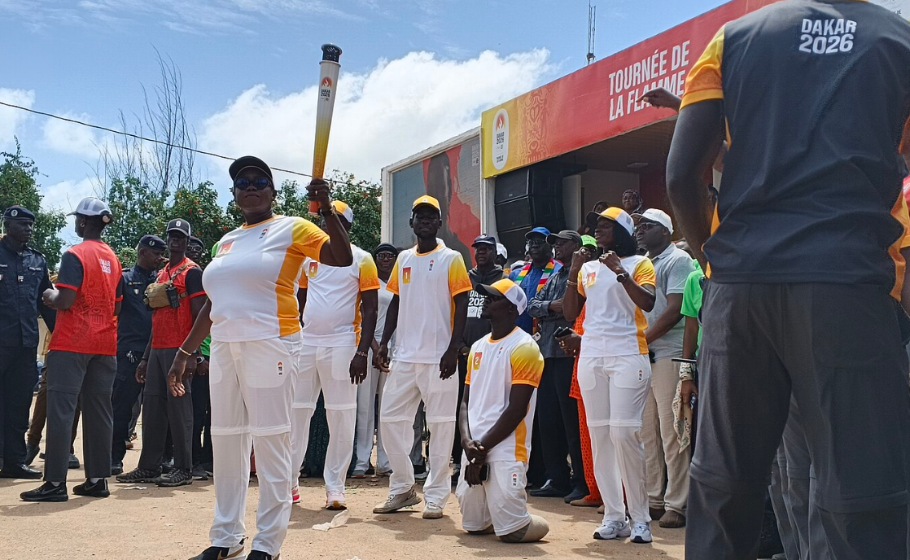
 Images: United States hosted Geneva Consensus Declaration (GCD) events in 2026 / Embassy of Belarus in the US / US Secretary for Foreign Assistance / X
In August, US Health Secretary Robert F. Kennedy Jr and Secretary of State Marco Rubio announced a “whole-of-government effort” to advance the objectives of the Geneva Consensus Declaration.
On September 23, Honduras, Trinidad and Tobago and Algeria joined the declaration at a UN General Assembly side event, bringing it to 46 signatory countries.
The Geneva Consensus Declaration and the proposed Core Group are separate initiatives, and there is no evidence that all 46 signatories have agreed to join a new Core Group.
But Huber has described the declaration as the “substantive basis” for the work ahead.
The significance of this is that that proponents of the Core Group are working within an established international network rather than starting from scratch.
What could a new Core Group actually do?
A new Core Group would not become another branch of the United Nations. Its influence, as described earlier, would instead come from governments coordinating their positions within the UN system.
That can include making joint statements, coordinating positions and votes, negotiating language and pushing for particular wording to be included in, amended or removed from resolutions and other international documents.
For LGBTQIA+ and reproductive rights advocates, the concern is that greater coordination between governments with conservative positions on abortion, family and sexuality could be used to block, weaken or remove language supporting reproductive and LGBTQIA+ rights in the UN system.
Maria Sjödin, executive director of Outright International, told Uncloseted that organised opposition could make securing protections for LGBTQIA+ people through the UN more difficult.
“We’re talking about the protection of some very basic human rights, and that the opposition to that is trying to organise to make it even more difficult to pass such a thing is really quite horrible,” she said.
Uncloseted also obtained an August briefing from reproductive-rights organisation Ipas, an NGO focused on reproductive justice, which warned that a new Core Group could facilitate “coordinated voting” intended to “dilute, block, or impose conditions on language regarding sexual and reproductive health and rights”.
Those are assessments from advocacy organisations about what a future coalition could do, rather than evidence of actions taken by a group that already exists.
But the mechanism they are describing is also the point of a Core Group: governments don’t need to create a formal UN institution to coordinate their positions and advocacy within the multilateral system.
 Honduras Secretary of State for Foreign Affairs and International Cooperation Mireya Agüero signs the Geneva Consensus Declaration alongside Bethany Kozma of the Geneva Consensus Declaration Secretariat. Image: US Department of Health and Human Services
So, how real is this proposed bloc?
There is still currently no new “pro-life” or “pro-family” Core Group operating at the United Nations.
At this stage, its proponents have held an international gathering, agreed to establish a convening committee and are continuing to develop plans for its creation.
Uncloseted reports that Ipas has itself cautioned advocates against overstating the proposed group’s current legitimacy or power, given that it does not yet exist and could still be some time away from any formal recognition within the UN system.
Calling it a new UN anti-LGBTQIA+ body would give the proposal institutional status it does not have.
Even still, that does not mean Ipas considers the proposal insignificant.
Gillian Kane, director of global policy and advocacy at Ipas, told Uncloseted Media the effort to establish the group should be taken seriously.
“I think it is highly likely this will happen,” she said in an email. “The desire, the constituency, and the vision are all in place; I imagine at this point it’s simply a matter of going through the UN bureaucracy to make it official.”
The proposal may not yet have the status or influence of an established UN grouping. But its supporters are openly trying to build a mechanism through which governments aligned around conservative positions on abortion, family and sexuality can coordinate more effectively within the UN system.
For the latest LGBTQIA+ Sister Girl and Brother Boy news, entertainment, and community stories in Australia, visit qnews.com.au. Find us on Facebook, Twitter, Instagram and YouTube.