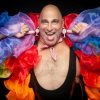
Award-winning Wiradjuri/Gamilaroi artist Kitty Obsidian is not only the first AFAB drag artist to compete in Miss First Nation, but they also won the coveted title on the weekend, as the pageant kicked off Melt Festival.
“I’m pretty heck’n amazed to be honest,” Kitty Obsidian told QNews about their Miss First Nation win on the weekend.
“And also overwhelmed.”
“The pageant itself was gruelling; we were doing 14 to 16-hour days and were constantly on the go.
“It was hard work, but one of the most incredible experiences of my life.”
One of the highlights for Kitty was the connection made with the other First Nation drag artists who also competed.
“We clicked immediately and were like a little family,” they said.
“We got along so well, there was no bitchiness, no cattiness, it was just love.”
“Being in a beautiful, loving, supportive environment felt really incredible.
“It felt like a drag family is meant to feel like.”
Started in 2017, Miss First Nation provides a platform for Aboriginal and Torres Strait Islander drag excellence to shine bright.
The pageant took a hiatus due to COVID and hosted an all-stars edition during Sydney World Pride.
This year, the competition returned to Melt festival, bigger, bolder, and filled with Blak excellence.
View this post on Instagram
‘It’s nice to be able to bring communities together’
“We haven’t done this type of installation for Miss First Nation since 2021,” founder Ben Graetz told QNews.
“It’s been great to come back after COVID and do one of our original editions.”
“It’s just so nice to be able to bring communities together.
“We have had artists messaging us for a while, asking when it would return, and who were keen to be a part of it.”
That’s something many of the artists shared when we interviewed them in the lead-up to the competition.
It’s special for Graetz, also known as drag performer Miss Ellaneous, to feel the importance of Miss First Nation.
And how it continues to elevate the power and visibility for other First Nation drag artists.
“It’s really much bigger than your typical pageant,” he said,
“There is a lot that’s involved.”
“We really want to create a safe space for these drag artists to connect and create family that continues well after the competition has finished.”
“It’s really building our drag creative scene and our art sector.
“And that makes me feel so proud for each of them as they grow from that.”
An award-winning advocate and burlesque drag artist, Kitty welcomed the opportunity to show all sides to themselves.
“One of my favourite things about drag is that it is such a melting pot of artistry,” they said.
“You can bring every skill set you have.”
“It’s no longer this idea of one very narrow perspective of what drag is; it’s anything we can think of.
“Miss First Nation gave all of us the chance to show our experience and our talents.
“To be able to do that as drag artists and black fella drag artists in this country is incredibly special.”
View this post on Instagram
‘It’s not just about what you have in your pants’
For Kitty, being an AFAB (assigned female at birth) nonbinary drag artist, entering Miss First Nation was a way to show the power of our communities’ diversity.
“I entered the competition because I wanted to show that drag is so multifaceted, and we have incredible drag performers of all genders,” they said.
“Knowing that I was the first AFAB drag performer was a big thing for me because drag isn’t just about gender.”
“It’s not just about what you have in your pants, it’s about the art form that we bring to the table.
“It defies the binary, and particularly as a black fella, it defies this idea of this white, colonial, conservative binary man in a dress thing.”
Kitty wasn’t the only nonbinary competitor in this year’s Miss First Nation pageant.
“We could all share our experiences being a black fella and trans in the colonial world,” Kitty said.
“And to be able to come together as artists and just be celebrated for who we are was wonderful to showcase.”
Graetz shared how proud he is that Miss First Nation continues to break ground in these ways.
“We’ve had our trans sister girl, Crystal Love, be a part of it, and that was a first too,” he said.
“Breaking those walls down, those barriers, to be able to allow that diversity in our sector to be visible is so important.”
“We have also spoken about drag kings as well, and want to figure out how we support them and help them be more visible.
“We are very responsive to our beautifully diverse community.”
View this post on Instagram
‘This talent is worth being seen’
Living with chronic illnesses made the schedule of the pageant quite an experience for Kitty.
So much so that they struggled to recount the moment they won.
“I think my brain had just shut down,” they said,
“Coming off stage after my performance, I wanted to vomit.”
“I was so anxious and exhausted, and having a really bad flare-up with my disability.
“Everyone was so supportive backstage.
“Making sure I had water and painkillers and doing what they could to help me.
“All while they were also getting ready for their own performances and in and out of costumes.
“My brain blanked, all I could think of was just smile and wave, there was nothing in the tank at that point.”
Rewatching their win, Kitty got spooked when the confetti cannons went off.
“It wasn’t computing and I ended up crying on stage.”
“I didn’t compete to win, I competed to show that AFAB drag and trans masc drag is valid and extraordinary.
“That’s what we bring to the table, and it’s just as good and as excellent as all of our siblings and sisters.
“That this talent is worth being seen, so to win was just overwhelming.”
View this post on Instagram
‘In queer spaces, we are often the minority’
Even though he was tired and driving back home the day after the competition, Graetz couldn’t have been prouder speaking to us.
Especially hearing from the competitors about how they didn’t have to mask in Miss First Nation.
They got to stand up authentically and represent their mob and themselves, which meant so much.
“In queer spaces, we often are the minority,” he said.
“And it’s really hard to be able to navigate those cultural sensitivities on multiple levels.”
“So to be able to come into a space where there’s cultural safety, there’s safe spaces, there’s the language, to have blak crew around us.
“It makes me feel quite emotional because we all just want to be our authentic selves in whatever space we are in.
“It makes me feel really upset that they don’t have that.”
Before signing off, Kitty wanted to share one last thing.
“I have so much love for all of my siblings that I made in that competition,” they said.
“It really didn’t feel like we were competing against each other; it felt like we were competing together against the criteria.”
“That made the whole experience all the more special,”
View this post on Instagram
For the latest LGBTIQA+ Sister Girl and Brother Boy news, entertainment, and community stories in Australia, visit qnews.com.au. Find us on Facebook, Twitter, Instagram and YouTube.