

With the lockouts repealed, $200m spent, and a minister appointed, every arm of government has moved on Sydney’s nightlife. One institution never got the memo, still runs dogs through drag shows, and is now the guest at which everybody else at the party quietly cringes.
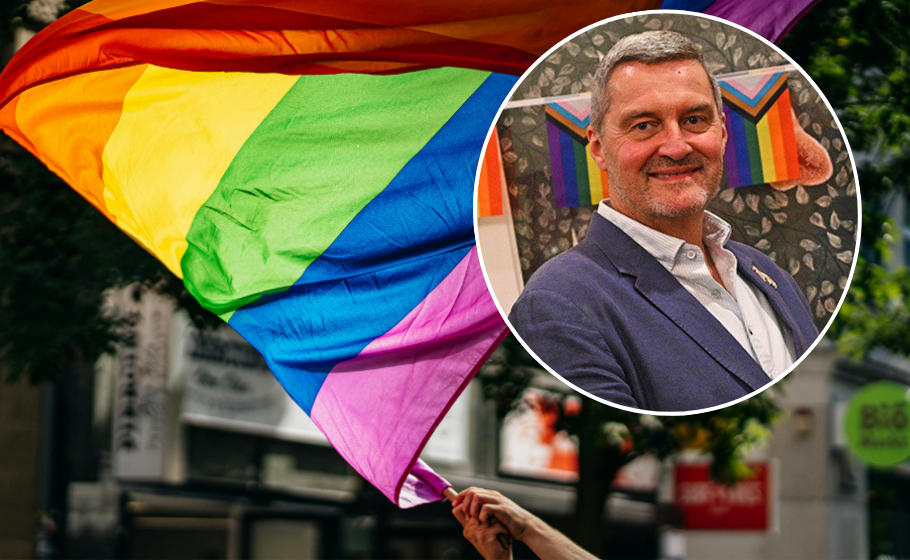
This is an op-ed written by James Thorpe. He is the Founder & Director of Odd Culture Group, advised the NSW government on liquor law reform, and is now a PhD researcher in nightlife safety at UNSW Law & Justice. He is also Vice-Chair of the Night Time Industries Association.
Years ago, at my first nightclub manager job in Sydney, I noticed a rather oddly dressed man in the early hours of the morning march behind the bar and start to dig through EFTPOS stubs next to the till.
I grabbed him by the arm and swiftly marched him to the door, and it was only when we reached the street that I realised, through his loud protest, that I had unwittingly ejected the area’s police licensing sergeant in the midst of an undercover operation.
He was attempting to audit whether we had served anybody more than two drinks, a high crime at the time, and proceeded to dress me down in front of the queue.
View this post on Instagram
The year was 2014. Under the freshly passed lockout laws, nightlife venues were the government’s folk devil – and all arms of government were using whatever tools they had at their disposal to snuff it out.
A lot has changed since then. We’ve repealed the lockout laws, created the first ministry for the night-time economy in the world, appointed a Commissioner, created a statute book that is an “enabling framework” for industry rather than a list of petulant rules and edicts, and managed to cajole most formerly hostile arms of government into viewing vibrant nightlife as something to support, rather than regulate out of existence. All, bar one.
Related content:
- NSW Police forced to reopen misconduct investigation into Oxford Street gay bar raids
- Divine Playhouse is back from the dead. Queer Sydney keeps making space
- ‘It’s not safe to go out’: NSW Police have raided Oxford Street (again)
The last hold-out
NSW Police are our state’s last hold-out on vibrancy. And, cruelly, the only arm that can walk into your business at two in the morning, and empty it by quarter past with impunity.
This winter the NSW live music inquiry heard of constant police head counts in jazz bars, of live music shut down at 8.30 pm, and, from the mayor of the state’s first Special Entertainment Precinct, that applications to open or extend hours are “met automatically with a submission of opposition from the licensing police”.
It heard that venues are asked to hand over next month’s schedules so an officer may form a view on the line-up, as if there is a police rank at which one is issued with taste.
Only the bravest operators repeat any of it to a reporter, which is why so little of it surfaces.
What has surfaced, though:
- Police seeking facial recognition, dance floor density caps and midnight drink limits at the Marlborough,
- thirty alleged breaches at Club 77, of which its owner says “not one of them happened”,
- Strike Force Raptor killing ONEFOUR’s tour with laws written for bikies,
- a 78er resigning from the force’s own LGBTQIA+ advisory committee,
- the City of Sydney resolving to oppose police submissions outright, and
- the police watchdog compelling the force to reinvestigate its own conduct during Pride month on Oxford Street, where officers cleared a dance floor for a dog operation, reportedly swore at patrons, and searched the drag queen working the door in plain view of her own queue. Only one of the ninety-three people searched that night was charged with supply – the reason dogs were given to police in the first place, and a purpose two decades of research and a coroner have found they do not serve. They went back on Saturday: over a dozen officers and a dog on Oxford Street, sixty-five searched, not one charged.
That is not harm reduction. Nor is it evidence-led: alcohol-related crime at licensed premises has not risen since the lockouts went, a considerable feat considering we have quadrupled the number of live music venues in the state and spent in the order of $200 million to get Sydney back out to venues after the devastation of the lockout laws.
Nor is it what the Police Commissioner says he wants. In fact, Mal Lanyon has backed the reforms repeatedly and publicly. The question is what becomes of that support on the way down.
NSW Police’s penchant for emptying queer venues
Asked about the police’s penchant for emptying queer venues, Police Association president Kevin Morton told 2GB this week: “You don’t leave a venue if you’ve got nothing to hide.”
In 2024, then-Commissioner Karen Webb apologised for forty years of officers being “indifferent, negligent, dismissive or hostile” towards gay men.
 Image: NSW Police Facebook
Two years later, that apology appears to have curdled into an alibi. Leave a venue when the police arrive, Morton suggests, and you have demonstrated precisely why they were right to arrive.
His comment betrays a remarkable failure of imagination: the assumption that everyone experiences the police as a straight white man might — as an authority to cooperate with, rather than an institution with which many communities have learned, over decades, to be very careful.
Asked at the Inquiry why there is such a disconnect between the Police’s stated support for Vibrancy, and what happens on the ground, designated Vibrancy czar Superintendent Paul Dunstan described a chain ending in regional licensing coordinators: “our conduits … or they’re tentacles down into all the licensing police out in the field.”
An octopus keeps two-thirds of its neurons in its arms rather than its brain, and a severed arm hunts on for the better part of an hour. An unwittingly accurate metaphor for a body whose head cannot govern its limbs.
Dunstan also candidly described his licensing community as “well-entrenched”, and his job “to change some hearts and minds” – another unfortunate phrase, which entered English vernacular from the counterinsurgencies of Malaya and Vietnam, where it meant winning over a hostile population in occupied territory. Again instructive.
The force investigated itself over Oxford Street and found no breach of policy. The cynic in me would love to call that a whitewash. But it was worse: it is probably accurate. There was no policy to breach, and there is no published criteria to hold police to account.
 NSW Police inside ARQ during an operation on Oxford Street on September 12, 2026. Image: Instagram
Police discretion’s demographic
Liquor & Gaming publishes its enforcement approach, as do SafeWork, the EPA, the Food Authority and Fair Trading. The police function that can end a business publishes nothing at all, so discretion fills with instinct; and instinct has a demographic.
I have sat in liquor accord meetings and heard a licensing sergeant oppose a drill hip-hop concert because “we don’t want those people coming to our suburb”. Nobody in the room needed a translation.
The nights NTIA members report as most scrutinised are Afrobeats nights. The night that ended with dance floors emptied, and patrons searched in bathroom stalls, was a drag show. Give an officer broad, unreviewable discretion and only their own instinct to go off, and patterns emerge.
There is a commercial consequence too. A drag show or a drill night costs money long before it earns any, and few will spend it with a blue sword of Damocles over the room.
Thus, the safest booking is the beige one.
That is not a safety outcome; it is cultural policy, written down nowhere, and set again at three in the morning by an officer nobody elected – and who would probably rather be asleep.
Responding to renewed criticism of Police this week, the premier told us, again, that a NSW Police officer is the hardest job in the state. Perhaps. But on a Saturday night the front line is not the police; it is a 24-year-old duty manager.
View this post on Instagram
We meet the drunk, the aggrieved and the unwell first, with every commercial reason to keep the night calm and no firearm on our hip. De-escalation is not an adjunct to hospitality; it is the job, and in my experience we are better at it than those who arrive afterwards.
We call police when the law requires it, or the tools in our emotional intelligence toolkit are exhausted. Nothing in the present arrangement makes that call easier – least of all the officer who attends your emergency who is all too eager to write you up for a blown exit light on the way out.
Little of it gets said out loud, because there is nobody to complain to but the retaliator, and retaliation is not unlawful, merely ruinous.
Engagement before enforcement
Convention requires me to say at this point that none of this reflects on the professionalism of police. It does, a little. But the fault is structural before it is personal: a police area command was never resourced to turn evidence into consistent doctrine, and was never asked to be.
The remedy is not fewer police but urgent policy and legislative change. The NTIA has written to both ministers calling for engagement before enforcement on New York’s CURE model; a Nightlife Assistant Commissioner accountable for licensing consistency; published, evidence-based criteria for the conditions police may seek to put on a venue’s licence; a protected channel for reporting police conduct; and no drug dogs in venues without specific intelligence.
Licensing officers should have a reason to regard extra footfall to their patch on a busy night as a success, rather than dreading the inevitable weight it will carry to their KPIs.
There is a further indignity here. Officers tell me licensing is not a job anyone in the force requests. They say it is a rung above Transport, and only barely so.
This means that we have some of the most intricate liquor and planning law in the world being interpreted by people who have, by their own account, drawn the short straw.

Until changes are made, vibrancy will remain the settled policy of New South Wales and its policing a matter of taste.
And the cost of that discretion will not be shared equally. It will be paid most often by the parts of nightlife that already sit furthest from the beige mainstream: queer venues, Black-led nights, Afrobeats, drill and other forms of culture that depend on being visible to exist at all.
It is a strange way to run a night-time economy: spend millions encouraging Sydney to be more interesting, then leave individual officers to decide, one Saturday night at a time, how interesting it is allowed to be.
Chris Minns is rather fond of casting the enemies of vibrant nightlife as people living in the town from Footloose, railing against the NIMBY instinct to tell other people what they can and cannot do after dark. It is worth asking whether, under his government, the NIMBY has simply found a uniform.
For the latest LGBTIQA+ Sister Girl and Brother Boy news, entertainment, and community stories in Australia, visit qnews.com.au. Find us on Facebook, Twitter, Instagram and YouTube.



Well written!
When you said &/or mention Footloose in your comment it reminded me of the (1984) Song of Footloose which was sung by an American singer of Kenny Loggins& also the (1984) Movie of Footloose as well too of course.