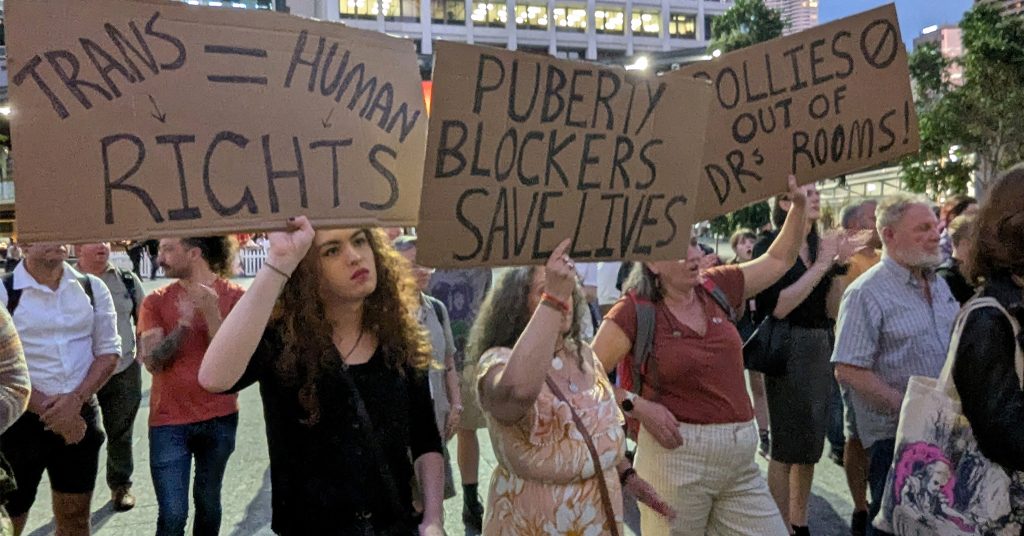
The High Court of New Zealand has ruled that the Government’s ban on new prescriptions of puberty blockers for young people with gender dysphoria was unlawful.
In November, 2025, New Zealand announced it would ban new prescriptions of puberty blockers for young transgender people.
“We are putting in place stronger safeguards,” Health Minister Simeon Brown said at the time. “So families can have confidence that any treatment is clinically sound and in the best interests of the young person or child.”
The announcement of the ban (which began on December 19) took place on the final day of Trans Awareness Week on the eve of Trans Day of Remembrance.
Related content:
- Puberty blockers are not reckless; they are about safety, space and time
- New Zealand bans puberty blockers for young trans people
- NZ High Court delays puberty blocker ban for young trans people
Pause on the ban originally approved by High Court in 2025
In December 2025, the ban was delayed by the High Court pending a judicial review.
The Professional Association for Transgender Healthcare Aotearoa (PATHA) had applied for an urgent injunction on the ban.
PATHA cited the move by the government as an “illegal and unethical decision” and a pause on the ban was approved.
Justice Wilkinson-Smith said the potential for a negative effect on mental health from the ban was “a far more immediate concern.”
And the timing of the regulations and lack of notice “had the effect of taking PATHA and the whole transgender community by surprise.”
“Standing back and looking at the overall justice of the situation, I am persuaded that a delay in enforcement of the regulations is the best option now available. The judicial review should be heard with all possible urgency.”
High Court has now ruled the regulations unlawful
Today, the High Court ruled that the Government “failed to adequately consult those affected by the ban,” RNZ reports, “failing to consult on the substance of the regulations and failing to directly consult with gender diverse young people”.
“It also found the restrictions unlawfully discriminated against gender-diverse young people, breaching the Bill of Rights.”
The NZ Ministry of Health undertook public consultation in 2024 on whether additional safety measures for the prescribing of puberty blockers in young people with gender-related health needs should be taken.
The majority of the public submissions opposed further restrictions.
The High Court found that there was “differential treatment” between young people with gender-related health needs and those who could access puberty blockers for other conditions.
“This differential treatment imposed a material disadvantage on young people with gender-related health needs,” they said, “As they are at high risk of seriously poor health outcomes, particularly self-harm and suicide.”
It also found that while there was a “rational basis” to impose restrictions on access to puberty blockers for some, a complete prohibition on prescriptions for new patients was a disproportionate response.
Northern Territory used NZ as case study, so what now?
When announcing the ban in November 2025, NZ Health Minister Simeon Brown said due to “a lack of high-quality evidence”, the Government was “taking a precautionary approach” to align NZ with the United Kingdom.
In the UK, new patients seeking treatment for gender dysphoria or incongruence can no longer be prescribed puberty blockers outside the context of a clinical trial. The trial, which is intended to assess their use for young people experiencing gender-related distress, is expected to run until 2031.
New Zealand’s decision drew on the UK’s Cass Review, which published its final report in April 2024. However, the Professional Association for Transgender Health Aotearoa (PATHA) argued the review was not relevant to New Zealand when it was released.
The Cass Review has also faced criticism from professional organisations internationally, including in Australia.
An Australian report evaluating the Cass Review recommended it should not be used as a guide of any kind regarding the care of young trans people.
Despite this, when Northern Territory Health Minister Steve Edgington banned puberty blockers and gender-affirming hormone therapy for transgender children, he cited New Zealand’s ban as part of his decision-making.
He claimed the Territory’s decision is in the interests of “child safety” and follows similar bans in Queensland, New Zealand and overseas, which have been condemned by medical experts as putting trans youth at risk.
If the NT Government is relying on overseas restrictions that have now been retracted to justify its own ban, should the evidence be used to guide healthcare policy in the Territory? And, considering this update in NZ, is there a case for independently reviewing the decision following what has happened in NZ, including whether restricting access to gender-affirming care is justified by the available research?
For the latest LGBTIQA+ Sister Girl and Brother Boy news, entertainment, and community stories in Australia, visit qnews.com.au. Find us on Facebook, Twitter, Instagram and YouTube.