

Darren Hayes joins music artists calling for legal retaliation after an AI watchdog revealed companies had stolen copyrighted songs without permission or payment from Kylie Minogue, AC/DC, INXS, Crowded House and more.
Last week, The Atlantic’s AI Watchdog database was launched, allowing the public to search 10 major datasets of pirated material known to have trained the AI models.
This is the first time the public has had access to this information about organisations such as Meta, OpenAI, Anthropic and Google.
It revealed that among 125 million works circulated throughout the AI-development community for the training of artificial intelligence models, four major music datasets were used. Without permission.
It also included:
- the 12.3 million-track LAION-DISCO-12M.
- The Library Genesis dataset of 81 million research papers
- Two literary datasets, including the 7.5 million-book Library Genesis
- Three datasets of 15.2 million videos
- A stolen collection of 138,000 scripts and subtitles from screen productions.
Millions of Australian works are believed to be amongst those taken without creators’ consent. Including works by Kylie Minogue, AC/DC, Crowded House, INXS, and Slim Dusty.

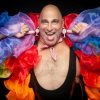
Australian singer-songwriter Darren Hayes called to stand up to the copyright theft on social media.
“Like most musicians, I woke up today to discover, thanks to The Atlantic AI watchdog tool, that every single piece of music I’ve ever written or performed over the past 30 years have been stolen without my permission and used to train AI ‘music’ making software.”
‘You shouldn’t be able to rely upon technology to fake a work of art’
“I want to keep this short by saying I’m advocating for the strongest legal retaliation possible,” Hayes said.
“And I’m calling upon all musicians and everybody who works in and makes (barely) a working wage in the music industry to stand up and fight against this copyright theft.”
“I absolutely feel adamant that just because you would like to be something, you shouldn’t be able to rely upon technology to fake a work of art and make you believe you created it.
“I played terrible piano. I have my whole life. I wish that I was a concert pianist, but guess what? I didn’t put in the hours required to learn such a skill. So I may do with the limited piano I can play, and I accept all the limitations and all the outcomes this can give me.
“So far, with just using my voice and a few rudimentary chords, I have been able to sustain a music career because I am proudly a Songwriter. I do the work. I take the risks. I take the failures. I have no fear that a bunch of robots could ever replace what comes from my heart and soul.
“But I absolutely feel violated that all of the hundreds and hundreds and hundreds of hours, blood, sweat and tears that I’ve put into my music, along with every other musician, have been stolen and served up like french fries to a piece of software that spits out shit.
“This isn’t the last you’ll hear me talk about this. But just know I am furious.”
 Image: James Reese/Supplied
‘No permission. No licence. No payment’
Australasian Performing Right Association (APRA) and Australasian Mechanical Copyright Owners Society (AMCOS) say this is being done without the artists being compensated at all
“This week, AI companies are asking the Australian and New Zealand governments for a copyright carve-out,” APRA AMCOS chief executive Dean Ormston said.
“We can show you exactly what they have already taken. No permission. No licence. No payment. These are not bargaining chips; they are the life’s work of Australian and New Zealand songwriters.
“Major tech platforms have not come to the table. Not once. Instead, they have lobbied governments, circulated policy papers, and proposed solutions designed to extinguish any obligation to pay.
“The only path forward is a genuine licensing conversation with the people whose work they have been using.”
‘Artists have not given permission for their work to be used’
Works by Aboriginal and Torres Strait Islander members, including Yothu Yindi, Gurrumul, Warumpi Band, William Barton, Christine Anu, Dan Sultan, Emma Donovan, Barkaa, AB Original and David Gulpilil were also used without permission.
“In some cases, this is material that has never been available for commercial use by anyone, on any terms,” said APRA AMCOS director of Indigenous programs, Leah Flanagan.
“[These] artists have not given permission for their work to be used to train these AI datasets. Many of these recordings carry cultural knowledge, language and connection to country.”
“Their use without consent is not acceptable; these are not just recordings, they are cultural expressions governed by protocols as well as copyright.”
For the latest LGBTIQA+ Sister Girl and Brother Boy news, entertainment, and community stories in Australia, visit qnews.com.au. Find us on Facebook, Twitter, Instagram and YouTube.





Copyright the usage of your voice and anywork you do and then they cant