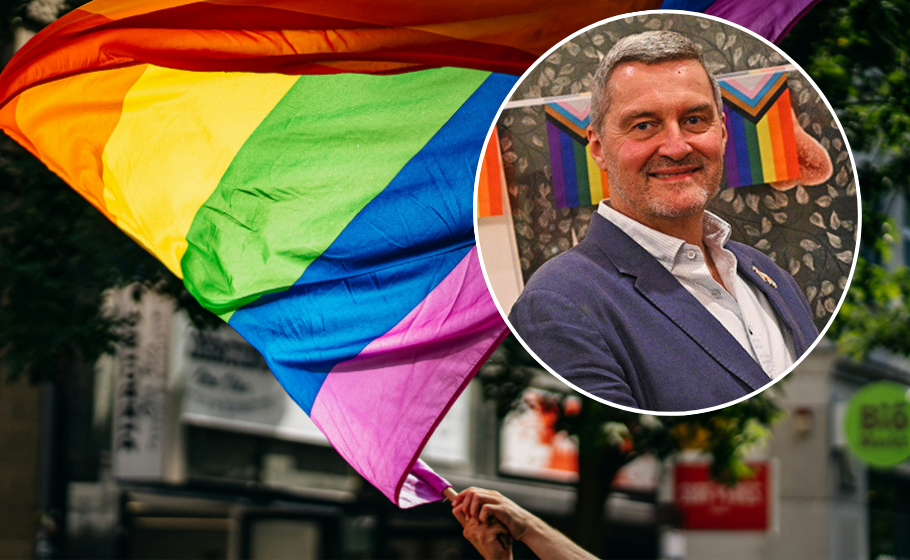
Rodney Croome, one of the founders of the Let Us Give campaign, shares how Australia’s gay blood ban was lifted to remind future LGBTIQA+ generations how change really happens.
I’m proud of the LGBTIQA+ people who have spoken out in recent days about the importance of gay, bi and trans (GBT) people now being able to give blood.
I chose to donate for the first time in my life, that’s something I am proud of too, despite my hatred of needles and my fear I would faint in front of the TV cameras (thankfully, I didn’t).
I’m grateful for the support and sensitivity of Lifeblood staff in the collection centre I attended and across the country.
The lifting of the gay blood ban will mean safer blood for those in need and help dislodge the prejudice that GBT people are some kind of threat to public health.
But much less edifying has been the spin about how this important change happened; spin it does us no favours to accept.
 Image: Supplied
Lifeblood has given the impression that lifting the gay blood ban was a step it willingly took in line with clinical evidence.
Some major LGBTIQA+ organisations have given the impression that they have always been pushing for this change.
Neither is true. Lifeblood resisted lifting the ban for many years, sometimes stridently.
Lifeblood dragged its feet
During the high-profile discrimination case against the ban taken by Tasmanian gay man, Michael Cain, in the early 2000s, the then Red Cross Blood Service declared “gay monogamy is a myth” and cited some of the same studies touted by anti-gay organisations like the Australian Family Association.
Lifeblood continued to drag its feet even when local and international evidence strongly supported removing the ban, and other countries like Canada, the UK, the US, the Netherlands, Germany, France, Spain, Greece and even Hungary allowed us to donate.
Then there was the endless, frustrating buck-passing, with Lifeblood, the National Blood Authority, the Federal Government, the Therapeutic Goods Administration and private blood trading company CSL all blaming each other for the lack of action.
In recent years, Lifeblood tried to dodge increasing pressure by saying a policy which focussed on the risk of a donor’s sexual activity rather than the gender of their partner would screen out too many existing heterosexual donors.
Then it tried to channel gay men down the “plasma pathway” while denying us the opportunity to give whole blood.
Even when Lifeblood relented, it still put in place medically unnecessary restrictions like a six-month waiting time for people who have not been monogamous, twice as long as in those other countries.
This extra precaution, not considered necessary when only heterosexuals could donate, sends the untrue message that there is still an element of heightened risk in allowing gay blood donation and reinforces the stereotype that gay men are less likely to be monogamous.
There are also continuing issues for people on PrEP and for trans donors, which Lifeblood has yet to address.
In short, Lifeblood was dragged to this reform, protesting all the way, and still seems uncomfortable with it.
An apology from Lifeblood for the harm inflicted by the ban would help turn the page on that history and heal old wounds, but there are no signs that it is being considered.
 Photos: Supplied/Adobe Stock
Major LGBTIQA+ orgs opposed the change
As for major LGBTIQA+ organisations, they have not led; they have only followed.
Whatever Lifeblood has proposed in the past – be it the lowering of the ban to twelve months, or to three months, or our segregation to the plasma pathway – major LGBTIQA+ organisations have applauded without a call for Lifeblood to go one inch further.
Rather than knocking down the door, they have waited until someone else opened it before walking through.
Worse, some of those large organisations actually opposed change.
In response to the discrimination case from Michael Cain, large Sydney-based LGBTIQA+ organisations published a full-page advertisement condemning the case and supporting the ban.
They did this without talking to Michael or his lawyers to find out what the legal strategy would be or who the witnesses were.
It seemed being onside with the powerful was more important to these organisations than defending those standing up to power.
Needless to say, their opposition to change was cited by Lifeblood to show GBT people were divided about lifting the ban, which we weren’t.
If neither evidence alone, nor the voices funded to defend our rights, are responsible for the change, what was?
Related content
-
‘For the first time in my life, I was able to donate blood today’
-
Advocates say blood donation monogamy questions are not best practices
-
Changes to blood donation sexual activity questions take effect from today
Reform came from below
It was a combination of grassroots advocacy, litigation, research and persistence.
Let Us Give’s research, conducted by the tireless Dr Sharon Dane, showed how the consensus of expert opinion favoured lifting the ban.
Her work also consistently undermined Lifeblood’s excuses, for example, by highlighting how other countries had not lost straight donors and how a segregated plasma pathway had been tried and failed overseas.
Let Us Give knew Lifeblood wasn’t keen to hear this, so we took our message to state and territory health ministers, whose approval is needed for any change, and who raised our concerns to Lifeblood for us.
We also took our message to the federal parliament, where the need for reform was consistently highlighted in question time, in Senate budget estimates and in adjournment debates, and even during election campaigns where candidates spoke up for change.
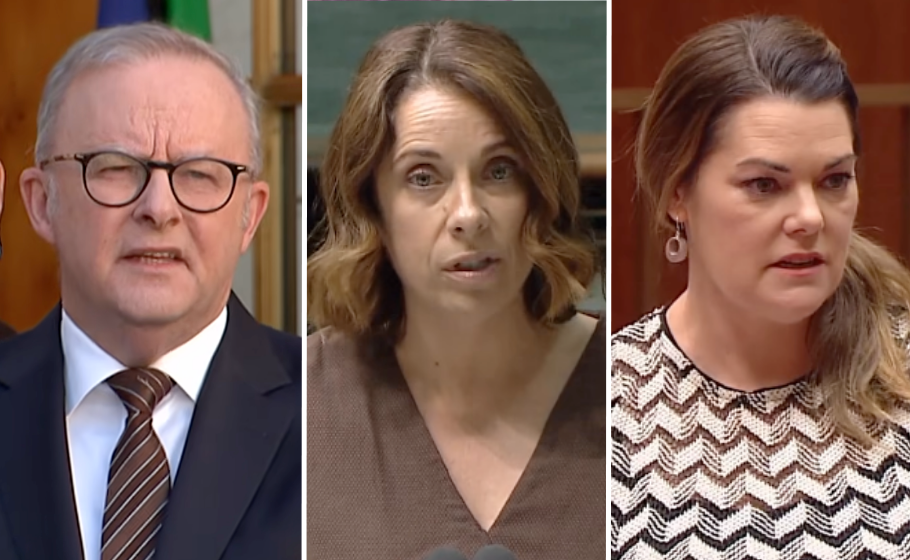
I tip my hat to Janet Rice, David Pocock and all those federal members who kept raising the need for reform.
 Photo: Lifeblood.
Let Us Give also supported litigation
I’ve already mentioned the high-profile Cain case from twenty years ago, but there have been more discrimination complaints since, and a corresponding increase in advocacy by the Australian Human Rights Commission.
There was also support from companies like QANTAS that responded to the concerns of their gay employees by telling Lifeblood they would not conduct workplace blood drives until all their staff members, regardless of sexuality, could donate
But just as important was the advocacy of everyday gay, bi and trans folk and their families.
Whether it was because of the inability to donate for a loved one under treatment, or the embarrassment of not being able to join a blood drive, or just a desire to give back, many GBT people felt strongly enough to write to Lifeblood and the Government demanding change.
This was a truly grassroots movement.
Why it matters
I don’t write this article out of a desire to boast or shame. I write it because I feel a duty to remind future generations of LGBTIQA+ people how change really happens.
Change rarely, if ever, comes from the top, or from those with a vested interest in not campaigning.
It is almost always from those with the most to gain from reform, and the least to lose from pushing for it.
As important as lifting the gay blood ban is, there is more to do to maximise the supply of safe blood and reduce discrimination in gathering that blood.
Further reform won’t be easy, given how difficult this current change has been.
If we look back at how changes were made in the past, we increase our chances of making changes in the years to come.
For the latest LGBTIQA+ Sister Girl and Brother Boy news, entertainment, and community stories in Australia, visit qnews.com.au. Find us on Facebook, Twitter, Instagram and YouTube.