Once a byword for homophobia and transphobia, the Tasmanian city of Burnie now leads on LGBTQIA+ equality and inclusion, writes Rodney Croome.
In the last three years, a third of Tasmania’s local councils have shown their support for LGBTQIA+ inclusion.
The latest was Burnie City Council, which passed a motion 8 to 1 to consult with the local LGBTQIA+ community and a develop a dedicated action plan.
Burnie’s support for LGBTQIA+ people is important because it is showing leadership in the north of the state when most supportive councils are currently in the Greater Hobart area.
But the importance of Burnie’s initiative runs deeper than that.
In the late 1980s and early 1990s, a movement against decriminalising homosexuality developed in response to the very visible and vocal campaign for gay law reform.
That movement was composed of a number of different groups who held rallies, organised letter writing campaigns, lobbied MPs and otherwise made sure its views were heard at every turn.
And it was largely based in Burnie and the surrounding areas.
The most homophobic place in the nation.
The city was on a fault line in Tasmanian history.
For fifty years, Burnie had staked its future on the promise of hydro-industrialisation.
A promise of prosperity built on endless electricity from impounded western rivers, powering more and more heavy industries.
But in the mid-1980s, that vision for the future had been challenged by the green movement.
Its successful blockade of the Franklin Dam stopped new dams being built.
Its successful campaign against a pulp mill at Wesley Vale drew attention to the pollution that Burnie’s industries poured unchecked into the sky and sea.
Many locals were anxious and looked for someone to blame for what they feared was a rust-belt future.
It was on that anxiety that the anti-gay movement fed.
I recall like it was yesterday hiring mini-vans in Hobart and travelling to Burnie to protest outside large, angry anti-gay rallies.
Or opening the local Burnie Advocate to see yet another letters page full of furious hate.
Or being asked to respond to yet another media statement from Burnie-based “Tas Alert” or “Concerned Residents Against Moral Pollution” proposing legislation to criminalise coming out.
You only need to read that part of Hannah Gadsby’s autobiography about her teenage years west of Burnie to see how bad things got.
Alternatively, look up old editions of Lonely Planet that warned LGBTQIA+ travellers not to visit the city.
Or the Australia Institute report on homophobia that found Burnie and its surrounding electorate of Braddon to be the most homophobic place in the nation.
 The LGBTQIA+ community was a scapegoat for Burnie’s social and economic issues in the 1980s, writes Rodney Croome (pictured). Photo: supplied.
Burnie has changed.
The ferocity of the anti-gay campaign prompted local LGBTQIA+ people and their allies to take action.
A support group for LGBTQIA+ people was established for the first time.
A group called Heterosexuals Unafraid of Gays was formed.
It held a forum at the Burnie Civic Centre where local LGBTQIA+ people talked about the damage hate caused.
A group of LGBTQIA+ people held a protest march through Burnie’s streets, the first of its kind in Tasmania outside Hobart.
Everyday, Burnie residents joined our protests outside anti-gay rallies, including a fellow I only knew as Tom.
He said he was a veteran and told me his mates died so we could be free to be who we are, “not for this hate.”
After decriminalisation in 1997, a committee was formed in Burnie and Devonport in response to the gay youth suicides that the anti-gay movement was responsible for.
It went on to form Tasmania’s groundbreaking LGBTQIA+ support and training service, Working It Out.
All of those years of protest and persuasion made a difference that was probably most obvious in the marriage postal survey result.
Burnie and the electorate of Braddon returned a solid majority in favour.
Burnie’s history of deep hostility and brave defiance is what makes the recent LGBTQIA+ inclusion motion so important.
The city’s representatives effectively repudiated the persecution of the past and upheld the legacy of those who stood against that persecution.
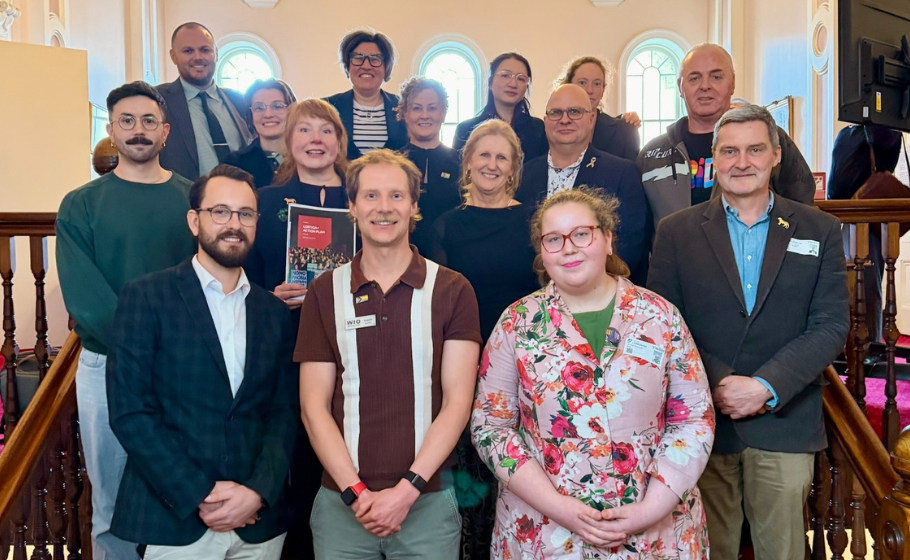
 LGBTQIA+ community members at Burnie City Council chambers on 29 April 2025, celebrating the council’s vote to support LGBTQIA+ equality and inclusion. Photo: supplied.
Hold your head up high.
Of course, prejudice still exists in Burnie.
The one councillor who voted against LGBTQIA+ inclusion, Trent Aitken, reminds everyone of this when he fearmongers about trans women on social media.
But even Cr Aitken’s anti-trans campaign is an example of how much Burnie has changed.
At the same meeting that passed the inclusion motion, his attempt to demonise trans women by asking how many complaints the council had received about trans women in women’s changerooms (none, it seems) was met with the revelation that this year there have been over 100 complaints against him.
The mover of the successful motion, Burnie’s Deputy Mayor Giovanna Simpson, said her aim was to ensure members of LGBTQIA+ community could “hold their head high and walk down the main street of Burnie”.
Whereas that once would have been a daydream, it now seems eminently possible.
There is a lot of hard work ahead to consult with the community and develop an action plan that will make a real difference in people’s lives.
But the knowledge that Burnie has turned a corner and will never go back is the inspiration we need to get the job done.
Rodney Croome is a long-time LGBTQIA+ advocate and spokesperson for Equality Tasmania. He was born in Burnie.
For the latest LGBTIQA+, Sister Girl and Brother Boy news, entertainment, community stories in Australia, visit qnews.com.au. Find us on Facebook, X, Instagram and YouTube.