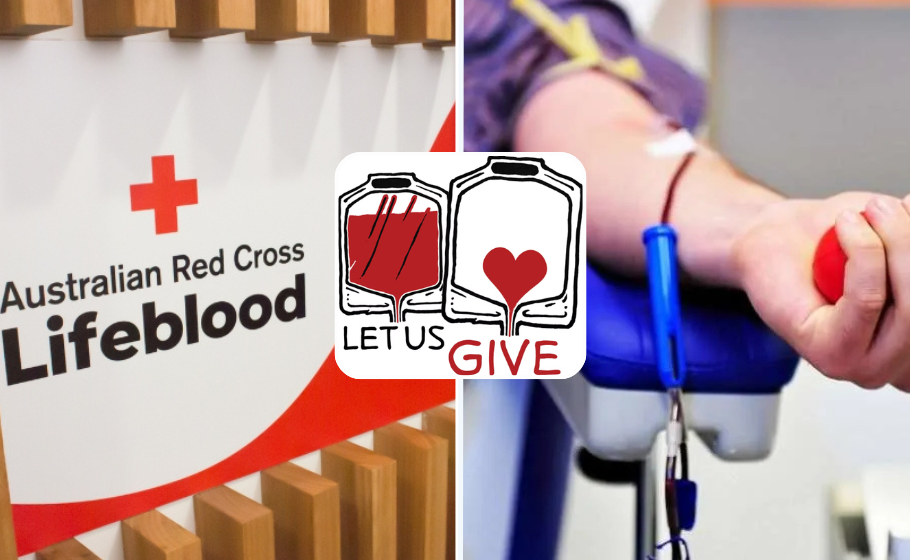
Lifeblood’s changes to blood donation eligibility questions earlier this year mean more gay, bisexual and transgender people in long-term monogamous relationships can donate blood. But campaign group Let Us Give has highlighted outstanding problems with the new blood donation rules that are still creating barriers for LGBTQIA+ donors.
In the past twelve months, Australia’s national donation service, Lifeblood, ended previous wait times for plasma donation around sexual activity, and later introduced new sexual activity rules for blood donations.
These changes have opened up the door for many who have previously been denied the ability to donate. Including sexually active gay and bi men, trans women and some non-binary folk, sex workers and women who have sex with bisexual men.
Many community members signed up to donate on the day the ban was lifted, some rolling up their sleeves for the first time in their lives.
 Image: Supplied
At the beginning of this year, it was reported that these changes had resulted in an extra 6,437 donations and 2,709 new donors. But after years of being denied the ability to provide life-saving blood or plasma because of their sexuality, many in our communities have abstained from donating.
This is something I have heard from a wide range of ages and identities; just because the rules have finally changed after years of campaigning doesn’t mean some people feel welcome or accepted.
Campaign group Let Us Give has written to Lifeblood highlighting some of the outstanding problems with the new blood donation rules.
Related content:
- How the gay blood ban was really lifted
- ‘For the first time in my life, I was able to donate blood today’
- Advocates say blood donation monogamy questions not best practices
What changes took effect?
In April, new sexual activity rules for blood donations took effect. Men were no longer asked in the pre-donation questionnaire if they’ve recently had sex with another man. Instead, all donors were asked the same sexual activity questions, regardless of gender.
This means most people in a sexual relationship of six months or more with a single partner will be eligible to donate blood. Additionally, most people with new or multiple partners will also be able to donate blood if they have not had anal sex in the last three months.
These changes enabled more people to donate blood, including gay and bisexual men and transgender people in long-term monogamous relationships, provided they meet all other eligibility criteria.
“While we are very pleased that the ban on gay, bi and trans blood donation has been lifted, the conditions under which this has occurred are less than ideal,” said Let Us Give spokesperson Rodney Croome
“For example, Lifeblood has put in place a six-month monogamy requirement that doesn’t apply in other countries and which sends the message that there is still a higher risk associated with gay blood donation. We have asked when this will be reviewed.”
View this post on Instagram
Making donation more accessible for trans donors
“We have received complaints from trans donors who have been required to out themselves before every donation by giving their sex recorded at birth,” Croome said. “This information is medically necessary but should only be asked once.”
“Lifeblood should also be clearer in its communications about what the new rules actually are, and it should acknowledge the pain and hurt caused by the old rules if it wants to encourage more older gay, bi and trans people to donate.”
As someone who has gone and donated blood and plasma since the changes, I can’t stress enough how much care all the team members take with respecting what it means for members of our communities to be able to donate. But the pathway to do it doesn’t have that same care.
Looking at the Lifeblood website, you wouldn’t know any changes were made. After years of being refused a seat at the table, there’s no dedicated space there to properly inform our communities about any concerns or questions they may have. That’s the first barrier for many; if they can’t find the information accessible to them, they won’t step in further.
That burden has continually been put on community and queer media, which we are happy to do, but we can only do so much when the internal processes have roadblocks; most get out of the car.
It all gets in the way of maximising the supply of safe blood
This is not about criticising, but clarifying.
Let Us Give is often contacted by people from LGBTIQA+ communities on whether they can or cannot donate under the new policy. (Honestly, so are we at QNews.) By getting better clarification from Lifeblood, the team at Let Us Give can advise these individuals correctly, and for our communities, these are pretty standard questions.
“Our questions to Lifeblood are not just about reducing discrimination against newly-eligible donors, but also about encouraging more donors,” Let Us Give researcher, Dr Sharon Dane, said,
“Overly restrictive rules, invasive and unnecessary questions, and lack of clarity and acknowledgement all get in the way of maximising the supply of safe blood.”
One in three Australians will rely on blood products at some point in their lives. At present, only 1 in 30 Australians donates.
The rules around our communities have changed, but for many the trust just isn’t there yet. There’s more work to be done.
 Southern Lights members donate blood and plasma together
Image: Supplied
The key points raised in the letter to Lifeblood by Let Us Give are:
- The new six-month monogamy requirement doesn’t apply in other countries. It sends the message that there is still a higher risk associated with gay blood donation. When will this be reviewed?
- Lifeblood’s communications fail to mention that the deciding factor for donation is anal sex with a new partner in the last three months. This gives the impression that monogamy is the only requirement, potentially losing new donors. Will Lifeblood amend its comms?
- Lifeblood should ask only trans donors for their sex recorded at birth once, not before every donation. Will this change?
- Lifeblood should have a dedicated page for the new rules on its website. It should acknowledge the pain and hurt caused by the former ban. Will this occur?
- People taking PrEP should be off the drug for twelve months before donating, but only 3 months in the US and UK. Why the difference?
- The Plasma Pathway has fallen far short of expectations. Why has this happened and how can plasma donation be increased?
Clarifying the questions above and working with the community to create communication pathways that reflect our lived experiences will make a big difference in helping more sexually active gay and bi men, trans women and some non-binary folk, sex workers and women who have sex with bisexual men to roll up their sleeves.
To donate blood, visit www.lifeblood.com.au or call 13 14 95.
For the latest LGBTIQA+ Sister Girl and Brother Boy news, entertainment, and community stories in Australia, visit qnews.com.au. Find us on Facebook, Twitter, Instagram and YouTube.