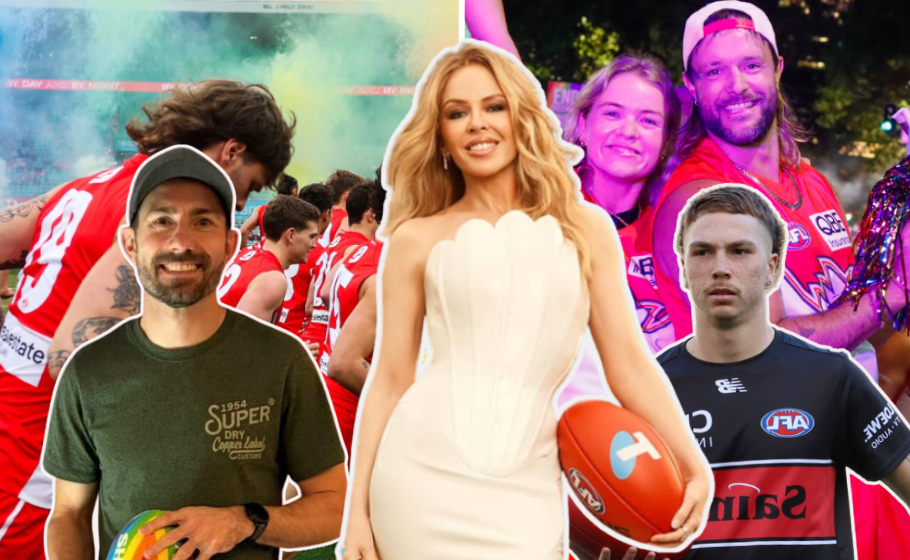
It’s interesting working in LGBTQIA+ media, especially when talking about AFL. The game is enormous, passionate and deeply embedded in Australian culture, which means the conversation around it is rarely just about what’s happening on the field.
Last year, we were writing about Rankine’s homophobic language and Snoop Dogg. Twelve months later, Kylie Minogue is the headline we can’t stop talking about. But she’s far from the only story. Around the AFL this year, we’ve also been talking about homophobia, Pride, toxic masculinity and allegations of sexual assault.
So, as the Grand Final approaches, have we actually moved the dial?
Will we ever have a year in AFL without something bubbling under the surface?
Probably not; it’s our national sport and a massive industry that has so many moving parts. What happens in and around it is directly related to how men behave, how queer people are treated and what the sport considers acceptable.
This year we’ve had AFL’s first player publicly come out as gay (let’s hear it for Leigh Ryswyk), more homophobia, a Pride Game removal, sexual assault allegations, and (of course) Kylie Minogue.
While we are fiercely #TeamKylie here at QNews, as we head towards this weekend’s Grand Final, we didn’t feel comfortable sweeping things under the rug.
So, as we did at the end of last year’s season, we’re reviewing the AFL with a queer lens and seeing if anything has changed since the last time.
Related Content:
- Remember when Kath & Kim sang at the Grand Final (forget Snoop Dogg)
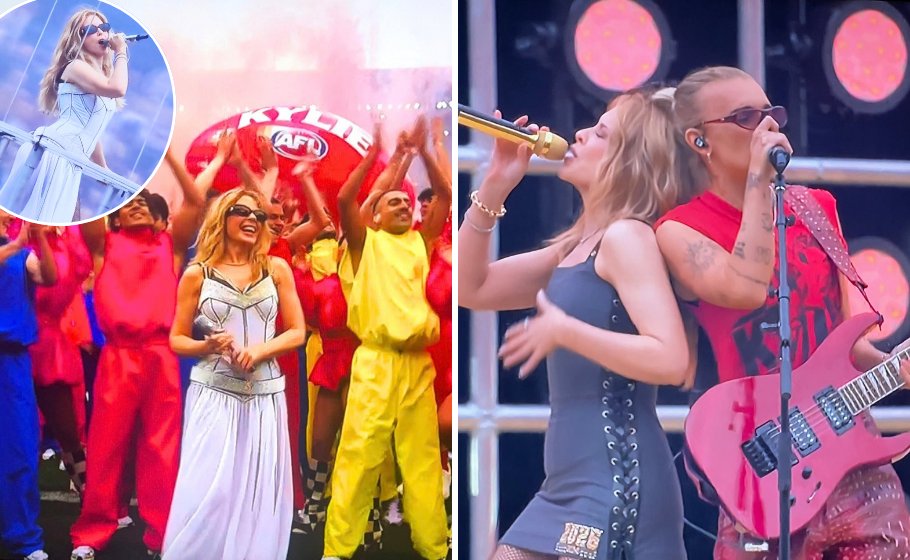
- G Flip will kick off Kylie Minogue’s AFL Grand Final performance
- Everything we know about Kylie Minogue’s AFL Grand Final performance
But first, a look back at the 2025 season
2025 was a whirlwind season for the AFL, specifically when it comes to LGBTQIA+ issues and representation.
Before the season even started, the league announced that all players and staff would complete an LGBTQIA+ education module. This was the first time any training and education on this level had occurred. It was a response to a spate of homophobic slurs in 2024.
It should be noted that the AFL signed a framework to become a world leader in stopping homophobic language used at all levels of the game in 2014. Eleven years later, mandatory training took place.
In July 2025, Sydney Swans player Riak Andrew received a five-week suspension for using a homophobic slur while playing for his club’s reserves team. Also in July, West Coast midfielder Jack Graham owned up to using a homophobic slur during a match, receiving a four-match suspension.
In August, nine years after he finished playing AFL, former West Coast player Mitch Brown came out publicly as bisexual in an exclusive interview with TDA.
Adelaide Crows’ Izak Rankine used a homophobic slur during a game against Collingwood. This received a huge amount of attention, so much so that Rankine left the country. He publicly apologised and received a four-match suspension.
Then came the Snoop Dogg situation.
The rapper said he was “scared to go to the movies now” on a podcast about the Toy Story spin-off Lightyear, because the film depicts a same-sex relationship where two women kiss for two seconds.
Fans called for the AFL to dump the artists. Senator Hanson-Young called out the AFL in Parliament for booking “slur-merchant” Snoop Dogg instead of an Aussie artist.
Snoop Dogg still played and, months later, partnered with GLAAD to stand against bullying queer youth.
View this post on Instagram
2026 started with reflection
2026 saw another former player come out of the closet, an interesting stance on homophobia and a Grand Final pre-game performance we are gagging for. Let’s break it down.
Days after he marched in the Sydney Gay and Lesbian Mardi Gras Parade, Australia’s first publicly out bisexual AFL player, Mitch Brown, shared an open letter to the AFL community to kick off the 2026 season.
Brown talked about whether people felt safe being themselves in the game. He continues to spotlight toxic masculinity and historical problems in AFL, something many of us are grateful for.
Izak Rankine returned to the Adelaide Crows following his suspension, after receiving an enormous amount of scrutiny in the press and online over his use of a homophobic slur.
He had apologised, but that wasn’t enough for some, with the online criticism continuing long after he had served his suspensio
It was refreshing, then, to see LGBTQIA+ supporter group Rainbow Crows publicly welcome Rankine back. They shared the conversations they had had about his return and advocated for others to move forward and let him play.
We don’t trust the machine of the AFL, and Rankine bore the brunt of the collective anger many had about homophobia in the game. Rainbow Crows showed that the people most affected by that homophobia could have a more nuanced conversation about what happens next.
Then March gave us a lot of twists and turns
Days later, former Brisbane Lions player Leigh Ryswyk came out publicly as gay on GayFL, a podcast and radio show on LGBTQIA+ radio station JOY 94.9.
Ryswyk said he decided to step up because “things need to change in sport, especially in men’s sport”, and he wanted better role models for his children. Being a very private person, it has been powerful seeing him share himself more publicly.
Days later again, St Kilda Saints AFL player Lance Collard went under investigation by the league for an alleged homophobic slur, less than two years after serving a six-game ban for the same offence.
Soon after, Kylie Minogue confirmed she would be performing at the Grand Final. What a month.
Even our own pop princess couldn’t pull focus on Collard’s homophobic slur for long, and what it revealed about the AFL tribunal’s inner workings was wild.
Collard denied using a homophobic slur at the AFL disciplinary tribunal, insisting he said ‘maggot’. After two days of deliberation, the tribunal found Collard guilty of conduct unbecoming, upheld the charge and handed down a nine-week suspension.
The Appeals Board reduced this sentence to four weeks, two of which have been suspended.
The AFL sacked the chair of its Appeals Board, Will Houghton KC, following his role and statement in the matter.
View this post on Instagram
In May, it was announced that Round 13 will no longer be allocated as an AFL Pride Game between the Sydney Swans and St Kilda due to the Collard and Tribunal fallout.
The Pride Game was moved to a new date between Sydney and the Western Bulldogs. The decision was welcomed by AFL LGBTQIA+ support groups.
In June, Gold Coast Suns player Max Knobel was suspended for four matches after admitting to using a homophobic slur during a VFL game against the Brisbane Lions.
Then in August, Sydney Swans vice-captain Isaac Heeney, Chad Warner, Nick Blakey, James Jordon and Riley Bice were suspended by the club following an incident after their Round 23 match against Essendon.
The five were also questioned by police as part of a separate investigation into allegations of sexual assault. According to reports, adult entertainers alleged they were touched inappropriately inside a Pullman Hotel room after the game.
This week, the five apologised to their teammates and staff. No charges have been laid, and QNews is not suggesting any wrongdoing by the players.
But the allegations are difficult to separate from the much bigger conversation happening around men’s sport, consent and gendered violence in Australia.
So, while AFL may have hoped to draw a line under the past year with Kylie performing at the Grand Final, it’s hard to look past literally everything else.
Change is taking time
One year on, toxic masculinity, allegations and homophobia in the AFL still dominates our newsfeed. And even though Kylie Minogue’s pre-Grand Final performance has shifted focus away from recent allegations in the news, it’s very difficult to feel 100% celebratory as we head towards Saturday’s match.
The AFL’s response to issues over the past year shows they are perhaps trying to start changing with the times, but it’s not going to be a quick change. There’s too much built into its structure and history for that to happen.
What seems to have begun changing the most over the last year, though, is the conversations surrounding what’s happening. They are getting louder. We are no longer excusing behaviour. AFL is charting a new course, because we are making them.
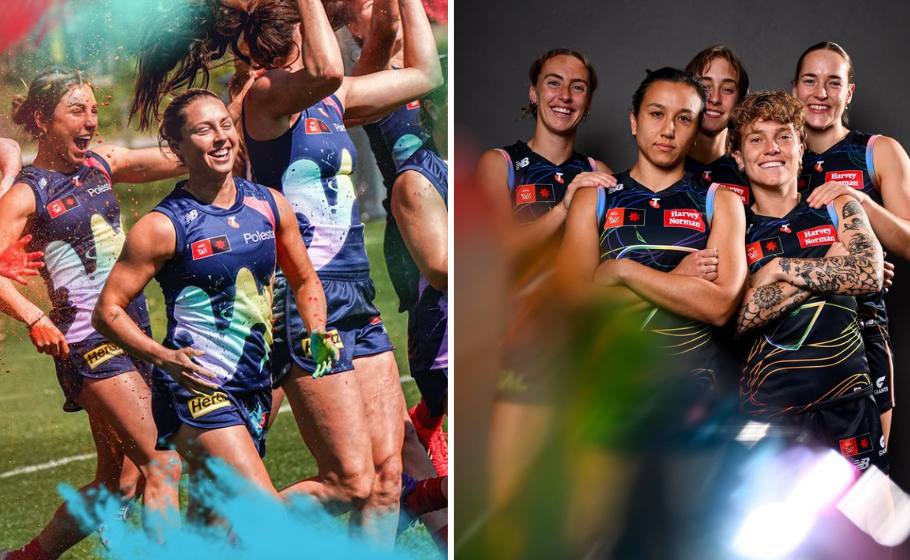
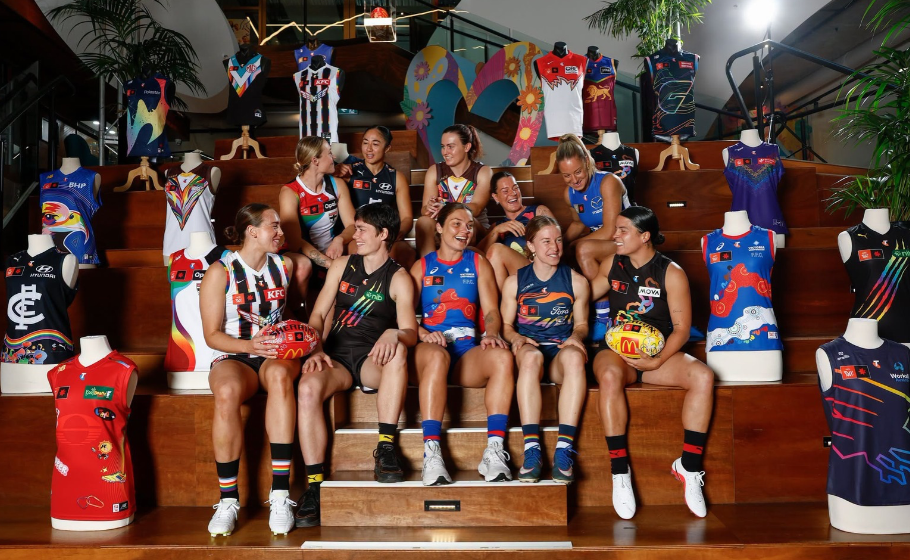
All this to say, thank god for the AFLW continuing to show us all how it can be done visibly and proudly.
And who else is ready to watch the Kylie concert with a side of AFL? As we celebrate the teams in the final, let’s remember to keep in mind the work yet to be done so that AFL can be safe and inclusive for all.
For the latest LGBTIQA+ Sister Girl and Brother Boy news, entertainment, and community stories in Australia, visit qnews.com.au. Find us on Facebook, Twitter, Instagram and YouTube.