The ABC says stepping back from LGBTQIA+ partnerships protects editorial independence. But in a media landscape already shaping — and at times distorting — queer narratives, “neutrality” isn’t a passive position. It’s an editorial choice.
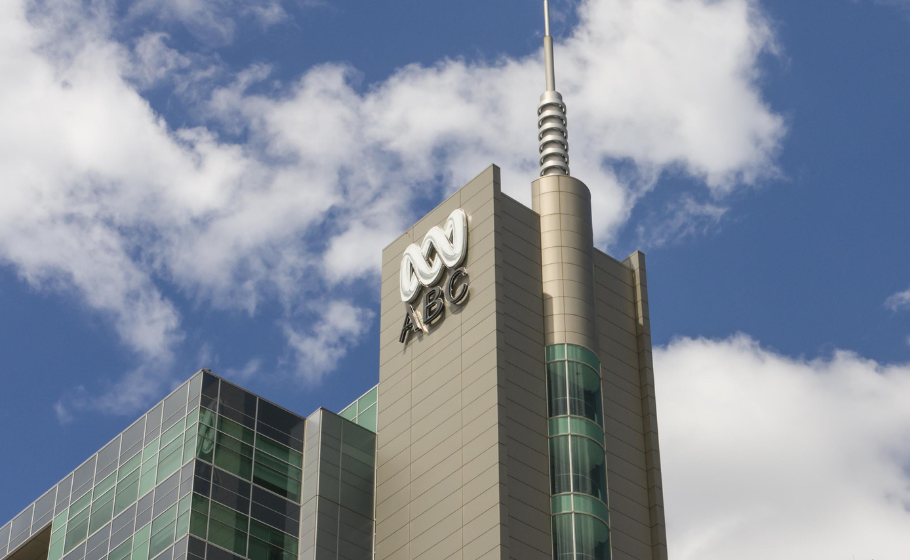
When the ABC announced it would step away from partnerships with organisations including ACON and programs such as Pride in Diversity, it framed the decision in familiar terms: editorial independence, neutrality, distance.
To report fairly, it suggested, you must remain separate — but neutrality, particularly in this context, is not a neutral act.
Neutrality as positioning
The ABC’s decision doesn’t just speak to internal policy. It reflects a broader moment in media, where institutions are re-evaluating how visibly they align with LGBTQIA+ communities, even as coverage of those same communities becomes more contested — especially when it comes to trans lives.
And it raises a more fundamental question: what does neutrality actually mean in practice?
Because journalism has never operated in a vacuum.
How news is actually made
The ABC, like any media organisation, makes choices every day — what stories to pursue, whose voices to platform, what context to provide, what language to use. These are not incidental decisions. They shape how audiences understand the world.
Objectivity, as it’s often understood, is not the absence of these choices. It is a framework for managing them. But even that framework is shaped by people, institutions, and priorities.
Media scholars have long argued that news is produced through processes of selection and gatekeeping, that what is included, and what is excluded, reflects the perspectives of those producing it.
So when the ABC invokes neutrality as a rationale for stepping back from its association with ACON, it is not removing itself from influence. It is making a different kind of editorial choice — one that still carries weight.
Why this matters now
That distinction matters, particularly now.
Public discourse around LGBTQIA+ issues is increasingly polarised. In that environment, the role of major institutions like the ABC becomes more, not less, significant. How issues are framed — whether they are presented as settled questions of rights or ongoing debates — shapes public understanding in ways that are far from abstract.
Internationally, this tension is already visible.
The BBC has repeatedly defended its coverage of trans issues as balanced, even as it faces sustained criticism from LGBTQIA+ groups, staff, and media commentators who argue that its approach to “impartiality” has, at times, platformed hostile or misleading perspectives — including a widely criticised 2021 article that drew protests from staff and external organisations for amplifying harmful narratives about trans women.
 ABC
ABCMore broadly, critics have argued that the BBC’s editorial framing — including policies that treat trans rights as a “debate” requiring opposing viewpoints — can create false equivalence between lived experience and ideological opposition.
Contributors to The New York Times have raised similar concerns.
In 2023, hundreds of writers and contributors signed an open letter criticising the paper’s coverage of transgender issues, arguing that it relied on non-expert sources, omitted key context, and lent legitimacy to narratives that have been used to undermine trans rights.
The paper has defended its reporting as fair and balanced — but the backlash underscores a growing concern: that “both sides” journalism, particularly on issues of identity and rights, can blur the line between reporting and amplification.
The ABC has not been immune to pressure — particularly from more conservative corners of the media and political landscape. As a public broadcaster, it operates under heightened scrutiny, expected to be both independent and representative, neutral and responsive.
Those expectations can sit in tension with each other, especially on issues where the stakes are uneven.
The uneven application of “neutrality”
In Australia, that unevenness is clear.
Right-leaning outlets, including those owned by News Corp, have long been criticised for their coverage of LGBTQIA+ issues — particularly trans communities — not just for tone, but for the real-world impact of that reporting.
And that criticism has been formally upheld.
The Australian Press Council found that The Australian breached principles of fairness and accuracy in its coverage of transgender issues, including publishing material that failed to distinguish fact from opinion, relied on non-expert commentary, and risked contributing to stigma and harm toward trans communities.
This is not neutral coverage. It is coverage that shapes narratives — and, in doing so, shapes public perception.
Which makes the ABC’s position more complex, not less.
Independence vs detachment
Because neutrality, in this context, is not simply about avoiding influence. It is about how influence is distributed — and how responsibility is understood.
There is a difference between independence and detachment. The ABC’s decision is framed as the former, but risks being read as the latter.
And when it comes to LGBTQIA+ issues, detachment is not without consequence.
Framing something as a “debate” can imply equivalence where none exists. Stepping back from visible engagement can signal that inclusion itself is something to be handled cautiously. Even the absence of positioning can shape what is seen as credible, urgent, or legitimate.
For a public broadcaster like the ABC, these signals carry particular weight.
Neutrality is still a choice
Because “neutrality” does not eliminate impact. It reshapes it.
So the question is not whether the ABC — or any media organisation — should strive for fairness. It should.
It is whether fairness requires distance.
Or whether, in moments like this, it requires a clearer recognition of the power dynamics already at play.
Because if one group is advocating for equal rights, and another is arguing against them, occupying the middle ground is not a neutral position.
It is a choice.
And like all editorial choices, it shapes the story.
For the latest LGBTIQA+ Sister Girl and Brother Boy news, entertainment, community stories in Australia, visit qnews.com.au. Find us on Facebook, Twitter, Instagram and YouTube.